When a fan filter unit fails acceptance testing on site, the question that matters is not which brand supplied the unit — it is which party in the contract chain was supposed to catch the mismatch before installation. Equipment supply, HVAC design, installation, and field testing sit in different contracts more often than they sit in one, and each of those contracts carries its own assumptions about what the others will provide. A cleanroom project that treats these as a single continuous scope, rather than as separate deliverables with defined handoffs, discovers the gap only when a unit is on site and something upstream or downstream does not match.
Define the Contract Boundary Before Assigning Owners
There is no default answer to who owns the interface between airflow equipment and the room it serves. The answer lives in the specific contracts the project has signed, not in a product category or a manufacturer’s website. Before assigning responsibility for any interface, the project team needs to identify the actual packages in play: is the airflow equipment procured directly by the owner, supplied through an EPC contractor, or bundled inside a mechanical subcontract? Each arrangement changes who is contractually obligated to coordinate with whom.
This matters because equipment suppliers, HVAC designers, and installation contractors each operate from a different set of assumptions about what “complete” means. A supplier may consider its scope complete once the unit ships with the specified filter and control package. An installer may consider its scope complete once the unit is physically mounted and wired. A design consultant may consider its scope complete once the drawings show the intended airflow path. None of these completions guarantees that the unit performs as a system once integrated, because system performance depends on how these scopes meet at their edges.
The useful discipline here is to list, for the specific project, every deliverable that has to cross from one party to another, the input each party needs before it can act, the point at which someone has to approve that handoff, and who signs off on it. This is a project-specific exercise. A configuration that works cleanly on one project — where, for example, the equipment supplier also holds the installation contract — can leave an unresolved gap on another project where those two scopes are split between different contractors. Reading a product page or an equipment family description does not answer this question, because a product page describes what a piece of equipment is capable of, not what a given contract obligates anyone to do with it.
Equipment Supplier Scope: What Is Inside the Package
Once the contract structure is understood, the next decision is to pin down exactly what the equipment supplier’s quotation includes and excludes. This means asking for a written statement of the unit configuration, the filters fitted, the control devices included, any accessories or options, the drawings and factory data that will be delivered, and — as important as any inclusion — an explicit list of exclusions. A quotation that is silent on installation, HVAC design, field balancing, or acceptance testing should not be read as including them; silence in a quotation is not the same as inclusion.
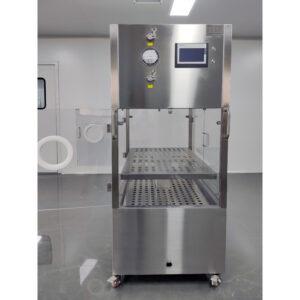
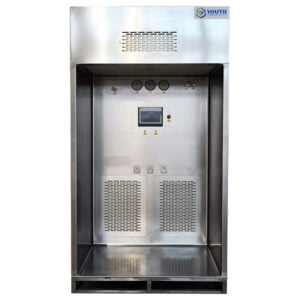
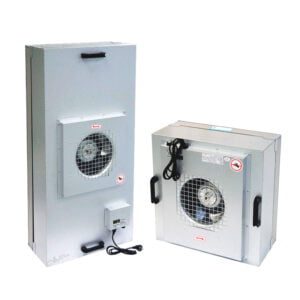
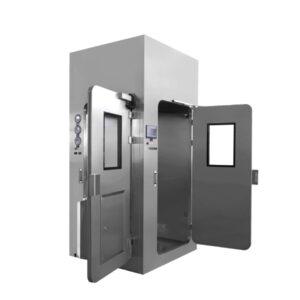
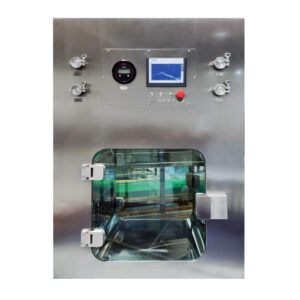
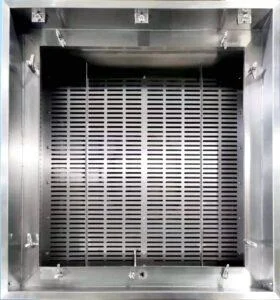
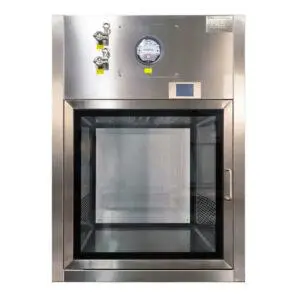
The current YOUTH FFU family and HEPA Housing Box pages establish the equipment families available for this kind of role in a room-air system, but a product family listing does not establish that a given quoted package includes installation, ceiling coordination, HVAC design, or on-site testing. Those are project-specific commitments that depend on the terms in the quotation and purchase order, not on the product family’s general description. Where a buyer needs the supplier’s package to interface directly with ceiling construction, the same caution applies to the Wall & Ceiling System family — its presence in the supplier’s scope answers what components are available, not who installs or seals them.
This is where project information flows into how a supplier’s quotation gets scoped: the information the buyer supplies about room layout, expected airflow basis, ceiling construction, and control architecture is what a quotation review can be built against. Without that project information, a supplier can only quote a standard configuration, and any comparison between that quotation and what the project actually needs remains incomplete. A configuration that suits a project with a simple, single-source ceiling plenum will not necessarily suit a project with mixed ducted and non-ducted zones, so the exclusions listed matter as much as the inclusions when comparing quotations across suppliers.
| Scope category | Supplier response requested | Project check |
|---|---|---|
| Equipment configuration | Units, filters, controls, accessories, and options included | Matches the approved equipment schedule |
| Physical interfaces | Unit envelope, support points, openings, seals, and access direction | Coordinates with ceiling and site drawings |
| Utilities and controls | Electrical and control connections, supplied devices, and integration limits | Matches the project utility and controls design |
| Documents and tests | Drawings, factory data, manuals, test provisions, and exclusions | Matches the submittal and verification plan |
HVAC Design and Ceiling-System Interfaces
The airflow equipment does not operate in isolation; its performance depends on how it connects to the air-source route feeding it, the upstream control devices governing that supply, and the ceiling or plenum arrangement it sits within. Price Industries’ application guide on how to apply fan filter units describes several distinct architectures — ducted supply, non-ducted common-plenum supply, recirculating arrangements, and mixed configurations — and each of these creates a different relationship between the unit and its upstream control. This is general industry guidance about how these arrangements behave, not a description of a specific YOUTH installation, but the underlying principle transfers to any project using this type of equipment: the choice of air-source architecture changes what has to be coordinated and who has to coordinate it.
Where a project uses a ducted supply, the interface responsibility includes duct sizing, static pressure balance, and the control strategy that governs airflow at each unit — decisions typically made by the HVAC designer, but only if the designer knows the equipment’s operating characteristics in advance. Where a project uses a non-ducted common-plenum arrangement, the interface shifts toward plenum pressure uniformity and the ceiling grid’s sealing quality, since multiple units draw from a shared space rather than individually ducted branches. A mixed arrangement combines both sets of interface questions and requires the design and equipment scopes to agree on which zones follow which logic.
Ceiling openings, unit support, and the return-air path are physical interfaces that also depend on this upstream architecture. A unit’s physical envelope and mounting requirements have to be checked against the ceiling system’s structural and sealing details before installation, not after units arrive on site. This coordination point is why the Lawrence Berkeley National Laboratory best-practice report on fan-filter units observes that a unit’s system performance depends on the air-system layout, pressure conditions, airflow, controls, and installation quality surrounding it — supplier-stated unit data and the project’s actual installed conditions have to share a common, explicitly defined basis before anyone can treat the two as comparable. Where that basis is not defined in writing, a unit’s rated performance and its as-installed performance are not the same claim, and the project needs to confirm which one any acceptance figure is describing.
Installation, Start-Up, and Field Testing Responsibilities
Between equipment arriving on site and a room being accepted as ready, a sequence of physical and evidentiary handoffs has to occur, and each one needs a named party and a documented record. These include delivery inspection against the approved schedule, sealing the unit to its ceiling support, handling and fitting filters without damage, completing wiring and duct connections, performing start-up, balancing airflow across units, taking airflow measurements, providing for filter-leak test access, and compiling the records that support an acceptance review.
Price Industries’ fan filter unit installation and service manual identifies these as distinct interface categories requiring coordination — ceiling-seal quality, electrical and control connections, duct balancing, airflow measurement, filter handling, and provisions for testing. This is model-specific manufacturer guidance, useful here only to show that these categories exist as separate coordination points, not as a universal assignment of who performs them or as a description of YOUTH-specific procedures. On any given project, a filter-leak test provision might be built into the unit by the supplier, added during installation by the contractor, or left for the testing party to arrange — and which of these applies determines who has to be informed early enough to plan for it.
The condition that changes this most is whether balancing and testing responsibilities are assigned to the installer, a separate testing contractor, or the equipment supplier’s field service. Where installation and testing sit with the same party, the handoff between them is internal and easier to track. Where they sit with separate contractors, the project needs a defined point at which installation is declared complete and ready for testing, along with agreement on what records the installer hands over — as-built connection details, balancing logs, or none at all. Without that defined point, a testing contractor may arrive to find conditions it cannot verify against any documented baseline, and resolving that gap after the fact costs more than assigning it before work begins. The article’s task here is to make each of these handoffs an explicit, assigned, and documented item — not to prescribe how balancing or leak testing is physically performed, which remains a project- and equipment-specific procedure defined elsewhere.
Build One Responsibility Matrix for Tender Clarifications
The interfaces described above only become manageable once they are collected into a single reference that names, for each one, an accountable party, the information that party needs before acting, the deliverable expected, the point at which it is reviewed, and whether it remains unresolved. Building this matrix during tender clarification — before procurement release — is what prevents an interface from being discovered only once equipment is on site.
The value of a single matrix is that it forces every interface to have a status. An item cannot be silently assumed to belong to whichever party seems most likely to have handled it elsewhere; it has to be either assigned in writing or marked open. Where a project has not yet assigned a given interface, the matrix should record that gap as open rather than defaulting it to the equipment supplier or any other party by omission — an unassigned interface is a tender clarification question, not a resolved allocation.
This is also the stage at which the project’s coordination decisions connect to the buyer’s next step with a specific equipment supplier: once the matrix identifies which physical and control interfaces the FFU, HEPA Housing Box, or related terminal equipment must satisfy, that list becomes the basis for reviewing what a supplier’s delivery, integration, and maintenance arrangements actually cover against what the project still needs assigned elsewhere. A matrix built this way also gives the project a structure for planning downstream qualification work, since the parties and records identified for installation and field testing are the same ones a qualification plan will later need to reference.
Where a project favors placing more of these interfaces inside a single contract — for instance, combining equipment supply with installation and start-up — the coordination burden shifts toward writing a complete scope into that one contract up front. Where a project instead splits these interfaces across multiple specialist contracts, the coordination burden shifts toward maintaining the matrix itself and resolving open items through clarification before each contract is signed. Neither approach is inherently preferable; the choice depends on which coordination risk the project is better equipped to manage, and that judgment belongs to the owner and its consultants, not to any single supplier’s stated scope.
| Interface | Required project record | Party to name in the contract | Closure point |
|---|---|---|---|
| Equipment configuration | Approved equipment and option schedule | To be assigned | Supplier submittal accepted |
| HVAC operating basis | Air-source route, scheduled airflow, pressure, and control concept | To be assigned | Coordinated design basis issued |
| Ceiling and support | Opening, support, seal, and access details | To be assigned | Coordinated installation drawing accepted |
| Electrical and controls | Power, wiring, network, alarm, and control boundaries | To be assigned | Interface schedule accepted |
| Installation and start-up | Delivery, installation, connection, balancing, and start-up scope | To be assigned | Field handoff recorded |
| Site testing | Tests, instruments, witnesses, records, and acceptance authority | To be assigned | Project evidence reviewed against the agreed plan |
Frequently Asked Questions
Q: Does buying FFUs from an equipment supplier make that supplier responsible for the room air-handling design?
A: No. Equipment supply does not establish that wider responsibility. Ask for the quoted configuration, interfaces, data, and exclusions, then assign air-source design, balancing, integration, and acceptance work through the project’s contracts and deliverables.
Q: A scope item is missing from both the supplier and installer offers. Who owns it?
A: It remains open until the project assigns a named party. Identify the missing deliverable, predecessor information, review point, and closure point, then resolve it through tender clarification. Do not attribute it to a party merely because it touches that party’s equipment.
Q: Can installation, start-up, and site testing be treated as one included service?
A: Only if the offer explicitly defines that combined scope. Otherwise distinguish physical installation and connections from start-up, balancing, airflow measurements, test provisions, records, and acceptance review. Each handoff needs an assigned party and an agreed project record.
Q: What makes a responsibility matrix useful before purchase?
A: It connects each interface to a deliverable and a named accountable party, including the information and review needed to close it. Use it to expose gaps in ceiling, air-handling, electrical, control, and testing scope before release. A list of organizations without those handoffs cannot show whether the work is covered.