The first useful question is not which product to buy, but where each protection objective actually sits in the process. Room background cleanliness, an exposed operation, and a terminal filter interface are different problems that often get collapsed into one equipment list too early. Getting that mapping wrong can shift responsibility onto a device that was never scoped to carry it, and it usually surfaces late—during installation coordination or commissioning. Building a zone-by-zone brief early gives suppliers something concrete to confirm instead of a generic performance target.
Begin with the Process, Exposure, and Movement Map
Selection cannot be resolved until the process is described at the level of what is exposed, where, and what moves past it. Start by asking where product, critical surfaces, materials, people, and equipment are exposed or travel. Those answers define the zones — not the room names, and not a cleanliness class chosen in advance. For sterile manufacturing, EU GMP Annex 1 provides an attributed example by defining a critical zone and the concept of first air, but that basis applies to EU sterile medicinal-product manufacturing. It does not set requirements for every cleanroom, and it should not be carried into a project as a universal grade or performance target.
The register below is deliberately restricted to process facts. Recording a cleanliness class or a control solution at this stage would prejudge a decision that the evidence has not yet supported.
Process and Exposure Zone Register
| Zone or location | Process activity | What is exposed | People or material movement | Project basis or unknown |
|---|---|---|---|---|
| Buyer-defined area | State the operation | Product, surface, material, or none identified | Describe routine movement | Cite the applicable project basis or mark for confirmation |
| Buyer-defined local point | State the operation | Identify the protected item or unresolved exposure | Describe interventions | Cite the applicable project basis or mark for confirmation |
If a row cannot be completed, that gap is itself a project input — it is not a reason to default to a familiar equipment family. The value of this register is that it forces exposure and movement to be stated before anyone argues about hardware.
Give Each Zone One Clear Protection Objective
Each room or local area needs a single stated responsibility: background filtered-air delivery, uninterrupted local airflow over an exposed operation, terminal filtration fed from a central air source, or a combination that has not yet been separated. Where more than one responsibility appears, assign them individually before selection begins; an unresolved overlap is a coordination problem, not a product choice. Record the applicable industry and project basis for each zone rather than assigning an unsupported class or performance value.
Zone Protection Objective Matrix
| Zone | Protection objective | Boundary to define | Evidence needed |
|---|---|---|---|
| Room background | Filtered-air delivery for the room-level project objective | Room boundary and operating condition | Project design basis and verification requirement |
| Local process area | Defined airflow protection at an exposed operation | Protected field and obstruction boundary | Process risk basis and agreed assessment |
| Terminal location | Filter and discharge interface from the selected air source | Housing, seal, connection, and access | Product and installation evidence |
| Unresolved overlap | More than one responsibility appears present | Assign each responsibility before selection | Coordinated review |
A zone that carries two unresolved objectives cannot be specified reliably until those objectives are separated and assigned.
Assign FFU, LAF, and HEPA Housing Roles Without Overlap
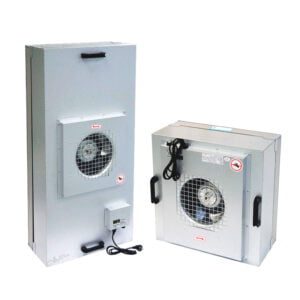
Market information describes fan filter units as stand-alone assemblies with an integrated fan, HEPA filter, and controls for cleanroom air delivery — a category distinct from ducted and terminal housing options. Camfil’s fan filter unit product-family page supports that equipment-family distinction only; it is market information and does not establish YOUTH specifications, cleanroom class, compatibility, or a project design. Use it to frame the role, not to conclude that one family substitutes for another.
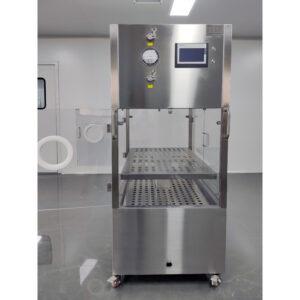
Within YOUTH’s own product routes, the fan filter unit (FFU) is the route for fan-powered cleanroom air-delivery options, the laminar air flow (LAF) unit covers localized unidirectional clean-air protection options, and the HEPA housing box addresses terminal housing, filter fit, sealing, and installation-interface planning. These three roles are not interchangeable: a fan-powered delivery unit is not automatically a local process protection device, and a terminal housing does not imply a fan.
Clean-Air Equipment Role Allocation
| Equipment family | Candidate responsibility | Do not assume | Supplier confirmation |
|---|---|---|---|
| FFU | Fan-powered filtered-air delivery at a selected ceiling or equipment location | That it alone defines local process protection or room performance | Duty, filter, controls, fit, and evidence |
| LAF unit | Localized unidirectional clean-air field around a defined work zone | That room air delivery automatically preserves the local field | Orientation, protected boundary, interfaces, and evidence |
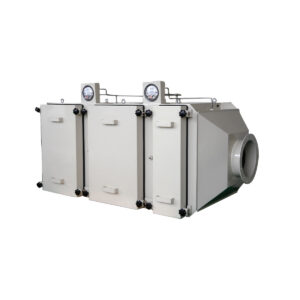
| Terminal HEPA housing | Filter, seal, connection, and discharge interface for the selected supply route | That it includes a fan or matches every filter and ceiling | Air connection, filter fit, sealing, access, and evidence |
Overlay the Interfaces That Can Change the Selection
A reasonable equipment-role choice can still fail to fit the project once interfaces are drawn. Supply and return paths, ceiling grid, ducts or plenums, utilities, controls, equipment envelope, people positions, obstructions, service access, filter replacement, and test access all sit between the role and the installation. Marking these on the same zone map used for the process register keeps them visible during supplier review rather than being resolved late by whoever installs first.
In the sterile-product context, Annex 1’s first-air language supports checking obstructions around critical zones. That is a basis for the obstruction check within its stated scope — it is not a general obstruction rule for other cleanrooms, and other projects must apply their own applicable basis.
Zone Interface Overlay
| Interface layer | Mark on the zone map | Decision effect |
|---|---|---|
| Air path | Supply, local discharge, return, and opening locations | Reveals possible interaction or obstruction |
| Building interface | Ceiling grid, duct or plenum, support, and penetrations | Establishes fit and coordination needs |
| Utilities and controls | Power, control point, network, and monitoring intent | Establishes connection and ownership questions |
| Operations | People, equipment, materials, and interventions | Tests whether the protected path remains credible |
| Maintenance and testing | Access side, removal route, and test point | Establishes lifecycle and evidence constraints |
Maintenance and test access deserves particular attention during this overlay, because an access route that is only discovered after installation can force a change in equipment position, housing orientation, or ceiling layout. That consequence is a coordination risk to be assessed per project, not a guaranteed outcome.
Convert the Zone Map into a Supplier-Confirmable Brief
A completed zone map is not yet a specification. It becomes actionable when each zone is issued with its process objective, the equipment role under consideration, known interfaces, required project evidence, buyer-provided information, open unknowns, and the questions the supplier needs to answer. For adjacent selection context, YOUTH’s guide to cleanroom equipment types, classification, and selection and its article on selecting and specifying systems for an ISO class and application can be used to structure those project inputs.
The brief should keep the responsibility boundaries established earlier intact: a background delivery zone should not be asked to answer a local process-protection question, and a terminal location should not be asked to define room performance. Where the zone register still shows an unknown, the brief should carry that unknown forward rather than resolving it by assumption. YOUTH can discuss project-specific configuration against the completed map; final values, capability, performance, certification, and acceptance remain subject to engineering and supplier confirmation based on the customer’s application and project.
Frequently Asked Questions
Q: I know the equipment families but not which one each zone needs. Where should I start?
A: Start with what is exposed and what protection responsibility the zone needs. Map the operation, people and material movement, then distinguish room background air delivery, a local protected airflow field, and a terminal filter interface. That gives suppliers a decision basis more useful than a list of preferred products.
Q: Can one equipment family cover every responsibility on my zone map?
A: Do not assume it can. An FFU, LAF unit, and terminal HEPA housing have different candidate roles, and an overlapping zone may require coordinated responsibilities. State each intended role and ask the supplier to confirm the configuration and interfaces rather than treating the families as automatic substitutes.
Q: How detailed must the map be before I ask for supplier input?
A: It needs enough detail to show exposure points, protection boundaries, movement, and known air, building, utility, and access interfaces. Unresolved project values can remain clearly marked. Ask specific questions about those unknowns so suppliers can explain what further information is needed for selection.
Q: Should I use pharmaceutical first-air requirements for every cleanroom zone?
A: No. First air and critical-zone concepts have a sterile-manufacturing context. Record the industry and applicable project basis for each zone, and use that basis to define the protection objective and verification evidence instead of assigning pharmaceutical requirements to unrelated operations.