Frequently Asked Questions
Q: Can a BIBO housing be retrofitted onto an existing BSL-4 exhaust system, or does it have to be designed in from the start?
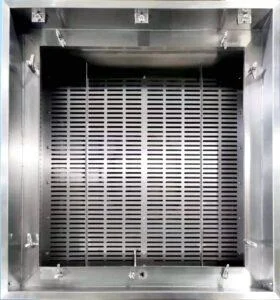
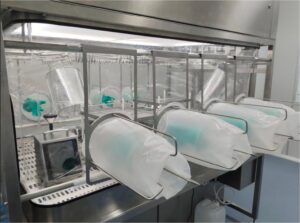
A: Retrofitting is technically possible but rarely straightforward, and deferring the decision almost always creates problems. The housing requires structural support for its weight, upstream ductwork connections sized for the flange and bag ring, space for a 2700 mm bag to deploy during change-out, and ports for VHP fumigation and PAO scanning. If those spatial and structural allowances were not built in, the retrofit scope can be significant enough that biosafety and facility teams will treat it as a new installation — restarting approval cycles. The safer path is to specify the decontamination concept and housing type before the mechanical design is fixed.
Q: When is a simpler sealed housing acceptable instead of a full BIBO system, and what determines that boundary?
A: A non-BIBO sealed housing may be acceptable when the project’s risk assessment supports direct technician contact with the filter and interior surfaces — but for BSL-4 exhaust, that threshold is rarely met. The deciding factor is whether any credible scenario requires the operator to touch the used filter or the housing interior before decontamination is confirmed. If the answer is yes, or if it is uncertain, BIBO is the required path. CDC/NIH BMBL and the WHO Laboratory Biosafety Manual both mandate a validated decontamination sequence before housing access; a simpler design that cannot demonstrate sealed, uncontacted removal will not satisfy that requirement regardless of airflow performance.
Q: What happens if the bag is damaged or the heat seal is incomplete during a change-out — is the filter still considered contained?
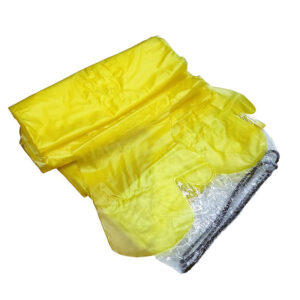
A: No — a compromised bag seal is a containment failure, and the procedure must stop. The BIBO mechanism depends on an intact, continuous barrier between the used filter and the ambient environment. A damaged bag, a loose nylon tie, or an incomplete heat seal between the two tie points eliminates that barrier and exposes the operator and surrounding surfaces to hazardous material. The correct response is to treat the area as a potential contamination event, notify the biosafety officer, and follow the facility’s spill or release protocol before proceeding. This is why operator training must cover inspection of the bag before and after each step, not only the sealing sequence itself.
Q: If the facility already has continuous differential pressure monitoring, is annual PAO integrity testing still required?
A: Yes, differential pressure monitoring and PAO scan testing serve different purposes and neither substitutes for the other. Continuous DP data confirms that resistance across the filter is within the expected range and provides the trigger threshold — typically ≥250 Pa — for scheduling replacement. It does not detect a pinhole leak, a frame seal failure, or installation defects that allow bypass without measurable pressure change. PAO/DOP scan testing under ISO 14644-3 and facility validation programs is the method that confirms the filter media and seals are intact. Both data streams together form the evidence package required to justify opening the housing for maintenance.
Q: Is the 3–5× cost premium for BIBO justified for a BSL-3 application, or is it mainly a BSL-4 requirement?
A: The cost is justifiable for BSL-3 as well, and in many cases it is required rather than optional. The deciding factor is not the biosafety level designation alone but whether the facility’s risk assessment permits direct operator contact with used exhaust filters. BSL-3 agents — including select agents such as anthrax — can remain viable on a used HEPA filter, and regulators applying CDC/NIH BMBL or the Canadian Biosafety Standard Third Edition will expect a sealed change-out method if direct contact is not acceptable. Where the risk assessment does support direct service with appropriate PPE and decontamination, a lower-cost sealed housing may be approved; but accepting that path requires documented justification, and many biosafety officers will not sign off on it for exhaust filters handling high-consequence pathogens.