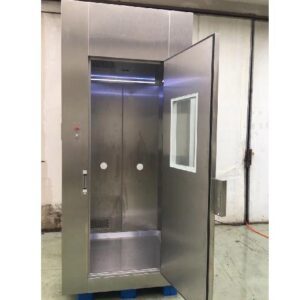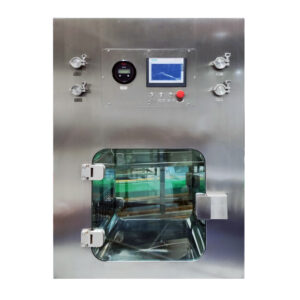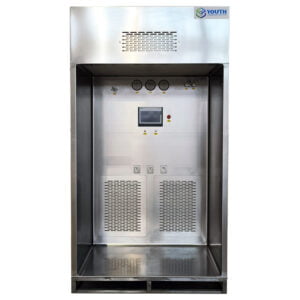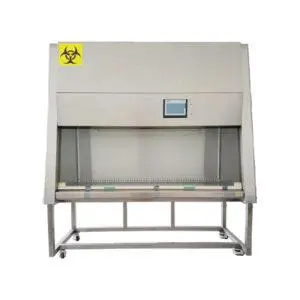
An RFQ for airflow equipment only produces comparable quotes when every bidder is pricing the same protected area, the same equipment role, and the same site interfaces. If those three items stay undefined, suppliers will fill the gaps with their own assumptions, and the quotes that come back will differ in scope before they differ in price. The work of writing the RFQ is the work of removing that ambiguity before anyone prices anything.
Start With the Protected Area and Required Air-Delivery Role
Before naming any piece of equipment, the RFQ needs to state what is being protected and why. Is the concern the cleanliness of a defined room volume, or is it the protection of a specific product, sample, or process step at one work location? These are different problems, and they call for different air-delivery roles even when the underlying filtration technology looks similar from a distance. A room-level cleanliness objective is normally met by distributing filtered air broadly across a ceiling plane. A localized protection objective is normally met by directing a unidirectional stream of filtered air over one defined work zone, independent of what the rest of the room is doing. Naming the equipment first, before the objective is fixed, risks asking suppliers to quote a solution to a problem that has not actually been defined yet.
The contamination-control objective also determines what “acceptance” will mean later. A room-level target is usually verified across the room or zone as a whole. A localized target is usually verified at the work position itself. If the RFQ does not say which of these applies, bidders may propose equipment sized and configured for one objective while the buyer is thinking of the other, and the mismatch will not surface until commissioning.
Cleanliness targets, airflow values, and acceptance criteria belong in this section as items to be confirmed, not as figures the RFQ can assume. Where the process use is already defined precisely, the buyer may already know the target classification and airflow range; where it is not, that gap itself is a piece of information the supplier needs to see stated as open, not guessed at. A supplier cannot quote a specific configuration against an unstated cleanliness target any more than a buyer can compare quotes that were each built against a different unstated assumption.
The intended process use also affects how much flexibility exists in later sections. A process that tolerates a wide range of air-delivery configurations leaves interface and control choices more open; a process with a narrow tolerance for disturbance in airflow pattern constrains ceiling layout, access direction, and even how filters are eventually serviced. Fixing the protected area and the air-delivery role first is what allows every later input — ceiling grid, utilities, control interface, test basis — to be read against a single, stable purpose rather than reinterpreted section by section.
Separate the FFU, LAF, and Terminal HEPA Supply Boundaries
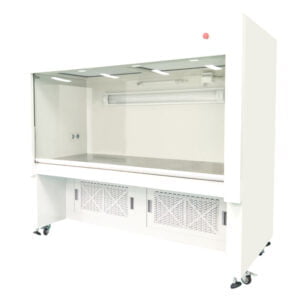
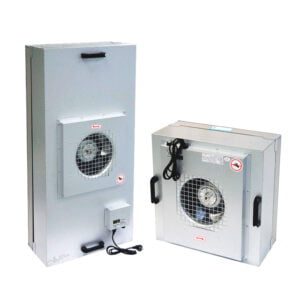
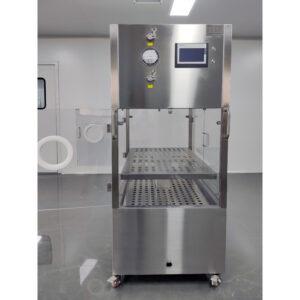
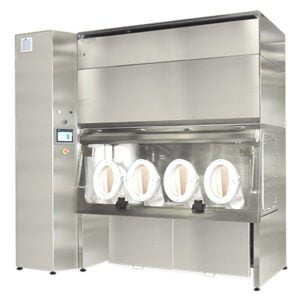
Once the protected area and the delivery role are fixed, the RFQ has to say which equipment family or families are actually being requested, because these are not interchangeable options that a supplier can substitute freely. An FFU is a ceiling-mounted filtered-air unit intended to deliver filtered air across a distributed ceiling plane, which fits a room-level cleanliness objective. An LAF unit is built for localized unidirectional protection at a defined work zone, which fits a product- or process-protection objective rather than a whole-room one. A terminal HEPA or ULPA housing serves as a ceiling or wall filter interface — the point where filtered air enters the space — and its role depends on what feeds it and how the room around it is arranged. These three roles can appear in the same project without being the same request, and the RFQ needs to state whether the buyer wants separate packages evaluated on their own terms or a coordinated set of parts that are expected to work together as one air-delivery system.
| Equipment family | Planning role supported by current YOUTH pages | Project confirmation needed |
|---|---|---|
| FFU | Ceiling-mounted filtered-air delivery | Unit configuration, control, size, and operating point |
| LAF unit | Localized unidirectional clean-air protection | Airflow direction, fan arrangement, support method, and filter selection |
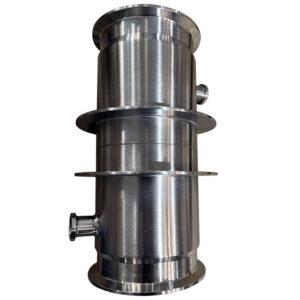
| Terminal HEPA/ULPA housing | Ceiling or wall terminal filter interface | Opening, filter fit, sealing, and service access |
This distinction changes what “the same quote” means when comparing bidders. A supplier quoting an FFU package and a supplier quoting an LAF package are not competing on the same scope even if both packages sit in the same room, because they are solving different parts of the airflow problem. Where a project genuinely needs both a distributed ceiling supply and a localized protected zone within the same room, the RFQ should say so explicitly, so that bidders price the interaction between the two rather than each pricing their own equipment in isolation and leaving the boundary between them unassigned.
Exact sizes, filter media, control architecture, materials, and stated performance remain supplier-confirmation items regardless of which family is named. Naming the family establishes what role the equipment plays in the project’s airflow strategy; it does not establish the configuration that will meet the project’s specific cleanliness or protection target. The current YOUTH pages for the Fan Filter Unit, the Laminar Air Flow Unit, and the HEPA Housing Box each describe a planning role in these terms, and the RFQ can point to whichever role matches the project without treating the page description as a substitute for a project-specific configuration.
Freeze Site and Interface Inputs Before Pricing
Air-delivery equipment does not exist independent of the space it sits in, and a large share of what makes one supplier’s quote different from another’s comes from how each interprets the physical and utility interfaces the buyer has not yet specified. The ceiling grid or support arrangement determines how the unit is physically carried and sealed, and a project with an existing suspended grid faces different constraints than one being built around the equipment from scratch. The available plenum or duct route determines whether air reaches the unit through ducted supply or through a return-air plenum, which changes both the unit’s construction and how it is accessed for service. Unit access direction — from above, from below, or from the face — determines clearances that the room design has to accommodate, and getting this wrong after equipment has been selected can force rework in the ceiling or the room layout itself.
Utilities and the control or monitoring interface belong in the same frozen set. Whether the equipment is expected to report status to a building or facility control system, run on local controls only, or use some intermediate arrangement changes what the supplier needs to include and what the buyer needs to provide at the boundary. The intended filter arrangement — how filters are loaded, checked, and eventually changed — interacts directly with the access direction decision, since a unit accessible only from below implies a different service approach than one accessible from above the ceiling.
| Input block | Project information issued with the RFQ | Response requested from the supplier |
|---|---|---|
| Protected area | Room or local zone, intended use, and contamination-control objective | Proposed equipment-family role and stated configuration basis |
| Ceiling and air path | Grid or support drawing, available space, and plenum or duct arrangement | Interface drawing, unit envelope, access direction, and exclusions |
| Utilities and controls | Available electrical supply and control or monitoring architecture | Required connections, supplied controls, and integration boundary |
| Performance and testing | Design operating point and project test or acceptance plan | Performance-data basis, test provisions, documents, and field handoffs |
The Price Industries installation and service manual for its FFU range illustrates that ceiling sealing, overhead support, wiring, duct balancing, controller selection, and field airflow measurement are each treated as separate interface topics rather than bundled into a single generic “installation” line. That separation is a useful structure for the RFQ even though the manual’s specific procedures apply to a named product range and cannot be read as a YOUTH specification. The underlying point holds generally: each of these interface topics can be assigned to a different party — buyer, supplier, or installing contractor — and if the RFQ does not force that assignment before pricing, each bidder will assume their own default, and the assumptions will not match.
Where the design operating point is already fixed by earlier engineering, the RFQ can state it as a given; where it depends on choices still open elsewhere in the project, the RFQ should say so, because a supplier pricing to an assumed operating point that later shifts is pricing the wrong equipment.
Compare Vendor Inclusions, Exclusions, and Test Deliverables
Two quotes that appear to price the same equipment can still represent different scopes if one includes items the other treats as excluded or supplied by others. The comparison has to be run line by line against a fixed schedule, not by comparing bottom-line prices directly. Equipment and filter shipment is the most basic line, but it already raises a question: does the quoted price include filters installed and ready, or filters shipped separately for field installation? Selected controls and accessories form a second line, since one supplier’s base price may include a control package that another prices as an option. Drawings, factory performance data, installation support, commissioning provisions, and field-test handoffs each represent a point where a supplier can either include a deliverable or leave it as the buyer’s responsibility, and a quote that is silent on one of these is not necessarily cheaper — it may simply be incomplete.
| Comparison line | Confirm as included, excluded, or by others | Evidence to request |
|---|---|---|
| Equipment and filters | Unit, filter shipment, selected accessories, and spare items | Itemized model or configuration schedule |
| Controls and interfaces | Local controls, network interface, sensors, and connection points | Control description and interface drawing |
| Installation and start-up | Support, sealing, wiring, duct connection, balancing, and start-up assistance | Responsibility statement and method-specific submittals |
| Performance and field tests | Factory data, access or test provisions, site measurements, and records | Named test basis, report format, and acceptance handoff |
Performance data deserves particular attention because it can be reported on inconsistent bases and still look comparable at a glance. Lawrence Berkeley National Laboratory’s best-practices guidance on fan-filter units recommends requesting performance information — including filtration, vibration, and noise — on a consistent test basis and for the operating conditions the project actually anticipates, rather than accepting whatever basis each manufacturer happens to publish. This supports building a comparison framework around a named test basis; it does not establish what any particular value should be or guarantee that a given unit will perform at a stated level in this project. If one bidder reports performance data at a different operating condition than another, the numbers are not directly comparable even if they appear on the same line of the quote.
Where installation and start-up support is quoted as included, the RFQ should require the bidder to state exactly what that support covers — sealing, wiring, duct connection, balancing, start-up assistance — since “included” can mean very different scopes of labor and responsibility from one supplier to the next. Camfil’s product description of its filter fan unit family notes that such a unit combines a fan, HEPA filtration, and controls, and may involve ceiling-module, access, and test-port options that need to be defined as a package; this is manufacturer product information specific to that company’s line, but the underlying point — that an FFU-type package bundles several decisions that need explicit definition — applies to any project comparing bids from more than one supplier.
Turn Open Items Into a Comparable RFQ Schedule
Every input left unresolved in the earlier sections needs to become one of three things before the RFQ is issued: a project input the buyer commits to, a question the supplier must answer in their response, or a coordination item assigned to a named submittal stage. Leaving an item ambiguous does not remove the decision — it just moves the decision to whichever party assumes it first, usually silently, and usually in whichever direction is cheapest for that party to assume. A buyer who wants comparable quotes cannot allow that to happen item by item across different bidders.
The practical mechanism is straightforward: for each open item — protected-area target, equipment-family boundary, ceiling interface, utility connection, control architecture, test basis — the RFQ states either the fixed project value, or the exact question the bidder must answer, and attaches a submittal stage at which the open item gets closed. Some items close at the proposal stage, where the bidder states their configuration basis and interface assumptions. Others close at a drawing-review stage, where the bidder’s interface drawing is checked against the actual site conditions. Others close only at commissioning, where the field test basis is applied and the acceptance handoff occurs. Sequencing matters because closing an item too late — discovering an interface mismatch at installation rather than at drawing review — costs more to correct than catching it earlier, even though the RFQ itself makes no claim about how much more.
The one discipline that holds the whole schedule together is refusing to let responsibility default silently. Design responsibility, installation responsibility, testing responsibility, compliance responsibility, and acceptance responsibility are each separate boundaries, and a bidder who does not explicitly state where their boundary falls on each one has not actually answered the RFQ, regardless of how complete their price looks. Requiring each bidder to state its boundary in writing, against the same schedule of open items, is what makes the resulting quotes commercially comparable — not because the equipment is guaranteed to be identical, but because the scope each bidder is pricing has been made explicit enough that the buyer is evaluating differences in approach rather than differences in what was silently assumed. A related same-site resource, the supplier assessment guide for cleanroom equipment procurement, addresses how to carry this comparison forward once responses are in hand.
Frequently Asked Questions
Q: Should my RFQ begin with equipment quantities or the areas we need to serve?
A: Begin with the room or local zone, intended use, and air-delivery responsibility. Then identify the equipment families requested and their package boundaries. Quantities without that basis can invite suppliers to quote different solutions to different assumed tasks.
Q: Can I request a coordinated package while leaving some configuration choices open?
A: Yes. Identify the known interfaces and name each unresolved size, filter, control, or duty decision as a supplier response or project confirmation item. Require a stated configuration basis and submittal stage rather than allowing open choices to disappear into quotation assumptions.
Q: How should I request noise or vibration data for fair supplier comparison?
A: Request data on a consistent stated test basis for the anticipated operating conditions. Tie each response to its offered configuration and operating point. Headline values reported under different conditions do not provide a normalized comparison.
Q: Does factory performance data include the field-testing work our project requires?
A: Not necessarily. Separate factory data from test provisions, site measurements, records, and the acceptance handoff. Ask every bidder to state which activities and documents are included, excluded, or by others so the equipment offer is not mistaken for the complete verification scope.