A cleanroom project crosses many hands before it becomes an operating space, and the moment two parties each assume the other owns a boundary, that boundary stops being managed by anyone. The question is not whether a responsibility matrix exists on paper, but whether it is built around the actual points where work, information, and approval change hands.
Map the project boundaries before assigning names
| Interface type | Boundary to map | Assignment check |
|---|---|---|
| Physical interface | Boundary among supply, site work, installation, and testing | Name one owner and record the contributors for the interface |
| Information interface | Boundary among producing, coordinating, and approving a drawing | Keep production, coordination, and approval responsibilities separate |
Before any names or company roles enter the matrix, the project team needs a clear picture of where one party’s work ends and another’s begins. These boundaries are not the same as organizational roles. A single company can sit on both sides of an interface — producing a layout and later installing against it — and the matrix still needs to separate those two positions because they carry different risks if left unclear.
Two kinds of boundaries recur across a cleanroom project. A physical interface is where supply, site work, installation, and testing meet: where a piece of equipment stops being a procured item and becomes something fixed, connected, and ready for test. An information interface is where a document or dataset changes hands or changes status: where a drawing moves from being produced to being coordinated with adjacent trades, and then to being approved for construction. Treating these as the same kind of boundary creates ambiguity, because the party who draws something is not necessarily the party who coordinates it against other services, and neither is necessarily the party who signs off on it.
The condition that changes how a boundary should be mapped is whether the work or information at that point depends on another party’s output before it can proceed. Where a boundary is self-contained — one party supplies, installs, and tests without needing an upstream input from someone else — a simple named owner may be sufficient. Where a boundary depends on sequencing, such as a wall penetration that must match a unit’s mounting dimensions, or a drawing that must be coordinated against mechanical and electrical layouts before it can be approved, the matrix needs to capture that dependency explicitly rather than assuming it will be resolved informally on site.
This mapping step is what determines how many rows the matrix will eventually need. A matrix built from a generic list of company roles will tend to undercount interfaces, because it groups activity by who performs it rather than by where handoffs actually occur. A matrix built from physical and information interfaces will surface boundaries that a role-based list would merge into one line, which is where unassigned scope tends to originate.
Separate design authority from supply and execution duties
Once boundaries are mapped, the next judgment is who holds authority at each one — and authority is not a single thing. Producing a design output, coordinating it with other disciplines, approving it for use, installing what it shows, and testing the installed result are five distinct duties, and a responsibility matrix that collapses them into one “responsible party” column will understate where disagreement can occur.
Design authority specifically concerns who has the right to determine what a solution should be — the layout, the specification, the interface dimensions. This is different from supply authority, which concerns who provides the physical equipment or material, and different again from execution authority, which concerns who installs, connects, and commissions it. A party can hold design authority without holding supply or execution authority, and a party can supply equipment without having had any say in how it was specified. Where these are not separated in the matrix, a common failure mode is that the party executing the work assumes design intent was already resolved, while the party with design authority assumes execution will raise questions if something is unclear.
The condition that changes how tightly these duties need to be separated is the degree of interdependency between the design output and physical constraints discovered later. Where a design can be finalized independently of site conditions, the separation matters less in practice because there is little opportunity for conflict. Where a design must respond to conditions only confirmed during installation — clearances, structural interfaces, service routing — keeping design authority distinct from execution duty becomes necessary, because someone needs the standing to decide whether a field condition requires a design change or merely a field adjustment within existing intent.
Approval authority deserves separate treatment again. Approving a drawing or a completed interface is not the same act as producing, coordinating, installing, or testing it, even though a single party sometimes performs more than one of these roles on a given project. Where approval sits with the same party that produced the work being approved, the matrix should still record that explicitly rather than leaving the approval column blank on the assumption that production implies approval.
Record inputs, outputs, approvals, and acceptance evidence at each interface
| Matrix field | What to record | Distinct control purpose |
|---|---|---|
| Named owner | One owner for the physical or information interface | Prevents the interface from remaining unassigned |
| Contributors | Other parties that contribute to the interface | Records multi-party involvement without replacing the named owner |
| Required inputs | The inputs required at the interface | Makes the information needed by the interface explicit |
| Outputs | The outputs produced at the interface | Makes what passes out of the interface explicit |
| Approval | The party responsible for approval | Keeps approval separate from producing, coordinating, installing, or testing |
| Acceptance evidence | The evidence used to accept the interface output | Prevents ownership alone from being treated as proof of acceptance |
With interfaces mapped and authority separated by duty, each interface needs a consistent set of fields recorded against it, because an interface with a named owner but no defined inputs or outputs is still incomplete. The owner answers who is accountable; the remaining fields answer what that accountability actually covers.
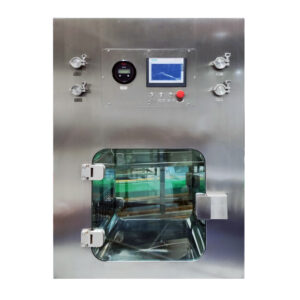
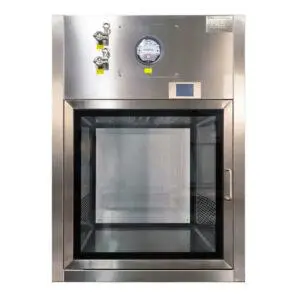
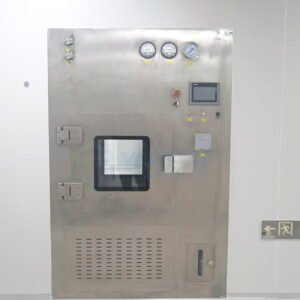
Required inputs matter because an interface cannot be executed correctly if the party responsible for it does not know what information or material it depends on. A pass box location, for example, depends on inputs from both the room layout and the adjacent corridor or support-area design; recording that dependency as an explicit input prevents the assumption that the party installing it will have everything needed without being told. Outputs matter for the same reason in reverse — the matrix should state what the interface is expected to produce, whether that is a physical installation ready for test, a drawing ready for coordination, or a dataset ready for another party’s design work.
Approval is where many matrices become unclear, because approval is often assumed rather than assigned. The condition that changes whether approval needs its own row is whether more than one party could plausibly claim or deny responsibility for signing off. Where only one party could ever be in a position to approve a given output, the risk of ambiguity is lower. Where approval could reasonably sit with a designer, a contractor, or an owner’s representative, leaving that field unassigned means the project has no mechanism to resolve disagreement when it arises.
Acceptance evidence is a distinct field from ownership and should not be inferred from it. Owning an interface does not itself constitute proof that the interface was completed correctly; the matrix needs to record what evidence will be used to accept the output — whether that is a test result, a sign-off record, or another defined deliverable tied to that specific interface rather than to the project as a whole. This separation reflects the lifecycle structure described in ISO 14644-4, which addresses design, construction, and start-up as a sequence with its own verification process, without prescribing which contractual party performs which step; the standard describes the lifecycle stages, and the project’s own matrix is what assigns the people and evidence within them.
A buyer preparing this information for a quotation review benefits from having these fields already defined, because the configuration details a supplier needs — which inputs it will receive, what outputs it is expected to deliver, and what evidence will be used to accept its scope — are the same fields the matrix requires at each interface touching that supplier’s equipment.
Resolve multi-party and unassigned scope through bid clarifications
| Matrix finding | Bid clarification point |
|---|---|
| No named owner | Assign one named owner to the interface |
| Several parties are listed without one owner | Name one owner and identify the remaining parties as contributors |
| Required input or output is blank | State the required input or output for the interface |
| Approval is missing or combined with another duty | Separate approval from producing, coordinating, installing, and testing |
| Acceptance evidence is blank | Identify the evidence that will be used to accept the interface output |
Mapping interfaces and recording fields will surface gaps, and the gaps themselves are informative. A blank owner, a listed group of contributors with no single accountable party, a missing input or output, or a missing acceptance-evidence entry each point to a different kind of unresolved scope, and each should be converted into a specific clarification question before the project moves further into procurement or construction.
An interface with no named owner is the most direct gap, and the clarification is correspondingly direct: identify who will hold that interface before work proceeds. An interface listing several parties without a clear single owner is a different problem — the contributors may all be correctly identified, but the matrix still needs one accountable party distinguished from the rest, because contribution and accountability are not interchangeable.
Where an input or output field is blank, the clarification needed is not necessarily about ownership but about definition: what, specifically, does this interface require to proceed, or produce once complete. Leaving this blank does not mean the information is unnecessary; it means the matrix has not yet forced the project team to state it.
Where approval is missing or has been folded into the same party responsible for producing, coordinating, installing, or testing the same output, the clarification is to separate that approval duty explicitly, even if the same company ultimately performs both roles under different functions. And where acceptance evidence is blank, the clarification is to state what evidence will actually be used — because an interface without defined acceptance evidence has no way to confirm it was completed to the standard the project required, regardless of how clearly ownership was assigned.
The condition that determines how urgently these gaps need resolution is how early the bid or tender stage sits relative to design freeze. Where clarifications are raised while the project is still in bid stage, an unassigned interface can be resolved through a question-and-answer process before any party has priced or committed to scope. Where the same gap is only discovered after contracts are signed, the same unassigned interface tends to surface instead as a late variation request or a dispute over which party’s scope should have covered it. Carrying every unresolved matrix cell into the bid clarification log, rather than leaving it to be resolved informally during execution, is what keeps that resolution inside the commercial process where it belongs.
Freeze the responsibility matrix into the contract and change process
A responsibility matrix that is finalized but never incorporated into the contract has no more authority than a planning note, because nothing obliges any party to follow it once work begins. The matrix needs to become a referenced contract document, not a document that exists alongside the contract informally.
Once frozen, the matrix also needs a defined relationship to the change process, because projects change — scope shifts, interfaces move, a party originally assigned an output may no longer be positioned to deliver it. The condition that distinguishes a well-governed matrix from a fragile one is not whether changes happen, but whether the matrix has a defined procedure for being revised when they do. Where no such procedure exists, the first project change tends to invalidate the matrix informally, because no party is obligated to update it or to confirm that the update has been agreed by the other parties affected.
A matrix frozen into the contract should specify who may propose a change to an interface assignment, who must approve that change, and how the updated version is distributed and reconfirmed to all parties who depend on it. This is distinct from the interface-level approval discussed earlier, because it concerns changes to the matrix itself rather than approval of a given output within an unchanged matrix. Where a project treats these as the same mechanism, a change to the matrix can be made by the same party whose authority the matrix was meant to define, which weakens the matrix’s function as a control document.
The equipment and interface detail recorded earlier in the matrix also carries forward into how delivery and coordination are managed once the project proceeds — a cleanroom system assembled from multiple equipment families depends on the same interface clarity the matrix was built to establish, since each family’s physical and information boundaries with the surrounding room and services were the reason the matrix was built in the first place. Freezing the matrix does not remove the need for judgment as the project proceeds; it determines who has the standing to exercise that judgment, and what evidence will be checked before a change to any interface is accepted as final.
Frequently Asked Questions
Q: How detailed should a cleanroom responsibility matrix be?
A: Build it around each meaningful physical or information interface where ownership or acceptance could be unclear, rather than around a generic list of companies. Each interface should identify one owner, any contributors, the required inputs and outputs, the approval responsibility, and the acceptance evidence.
Q: Does naming the cleanroom supplier make it responsible for every cleanroom-related task?
A: No. Supplier scope must be separated from design authority, site work, installation, testing, and approval at each interface. Define the exact boundary for the modular cleanroom or cleanroom system package, then assign every adjoining duty explicitly.
Q: Can one party produce, coordinate, and approve the same drawing?
A: The project may assign several duties to one party, but the matrix should still record production, coordination, and approval separately. This makes the intended checks visible and prevents one broad assignment from hiding an unowned duty.
Q: How should a buyer compare bids that assign the same interface differently?
A: Compare the bids against the same interface row, then clarify the proposed owner, contributors, inputs, outputs, approval, and acceptance evidence. Resolve material differences in the bid clarification log before the matrix is incorporated into the contract.
Q: Does a completed responsibility matrix prove compliance with ISO 14644-4?
A: No. The matrix allocates project responsibilities and acceptance evidence; it does not by itself demonstrate that cleanroom requirements or verification have been met. ISO 14644-4 provides lifecycle context for design, construction, start-up, and verification, while the project must still define its delivery, approval, and acceptance arrangements.