A part arrives at the receiving dock already carrying whatever contamination its supplier, its packaging, and its journey gave it. Before it can sit next to an exposed assembly, someone has to decide what that part needs: inspection, unpacking in a defined place, cleaning by a permitted method, protection afterward, and a release decision made by someone accountable for it. Getting that sequence wrong does not usually announce itself — the part looks fine, the assembly proceeds, and the contamination risk simply moves downstream with it.
Classify Incoming Parts by Exposure, Soil, Packaging, and Sensitivity
| Classification input | What to establish for the incoming part | Decision informed |
|---|---|---|
| Exposure state | Whether the part is already exposed or remains protected before clean assembly | Where protective packaging may be removed and when the part enters controlled handling |
| Supplier packaging | The packaging condition in which the part reaches the facility | Where outer packaging is removed and what must be inspected at receipt or unpacking |
| Visible soil | Whether visible soil is present at the relevant inspection point | Whether the part can proceed or needs a permitted cleaning response before release |
| Cleanability | Whether the part and its handling container can be cleaned effectively by a permitted method | Which cleaning method, if any, can be used without relying on an ineffective container or process |
| Material sensitivity | Which permitted cleaning or handling choices the material can tolerate | Which cleaning and transfer choices remain applicable to that part |
| Contamination consequence | The consequence of carrying contamination from the part into exposed assembly | How restrictive the acceptance, protection, transfer, and release rules need to be |
Not every incoming part presents the same handling problem, and treating them as a single category is where many transfer rules start to fail. A part that arrives inside sealed, qualified packaging and stays sealed until the point of use carries a different risk than one that arrives loose, wrapped only for transit damage protection. The packaging condition at receipt determines where outer material can safely be removed and what inspection has to happen before the part moves further — if that boundary is not fixed in advance, operators make the call individually, and the rule stops being a rule.
Visible soil is a separate axis entirely. A part can be properly packaged and still show soil that packaging never addressed, and a part can be unpackaged with no visible soil at all. Whether soil is present at the relevant inspection point decides whether the part proceeds as-is or needs a cleaning step before it is accepted into controlled handling. That cleaning step, however, is only available if the part and the container or fixture carrying it can actually be cleaned by a method the facility is prepared to use. A part made from a material that cannot tolerate the available cleaning method is not a cleaning problem — it is a sourcing, packaging, or alternate-handling problem, and conflating the two leads to parts being “cleaned” in a way that damages them or leaves contamination behind under a false confidence that the step occurred.
Material sensitivity interacts with all of the above. Where a material tolerates a wide range of cleaning and handling choices, the facility has flexibility to standardize its process. Where it does not, the acceptance and release rules for that part need to be more specific, even if the part looks similar to others passing through the same receiving area. The last input — the consequence of carrying contamination from that part into exposed assembly — is what ties the others together. A part destined for a step where contamination has no path to the finished product does not need the same restrictiveness as one headed directly into an exposed, sensitive process. Classifying parts along these dimensions, rather than by part number or supplier alone, is what lets a facility write rules that are strict where they need to be and not everywhere by default.
Set Receipt, Unpacking, Cleaning, and Release Boundaries
Once parts are classified, the facility has to decide where each stage of handling physically and procedurally happens — and where one stage ends and the next begins. Receipt is not the same event as unpacking, and unpacking is not the same event as release into assembly, even though all three can occur within a short span of time and distance. Each boundary needs a defined location, a defined action, and a defined person or role responsible for the decision at that point.
Where outer packaging is removed is a design decision, not an operational convenience. If packaging removal happens too close to the assembly area, any contamination on the outer packaging has a short, uncontrolled path to the clean side. If it happens too far upstream with no subsequent protection, the part can pick up new contamination between unpacking and use, defeating the purpose of removing packaging at all. The same reasoning applies to inspection: what gets inspected, and at which of these boundaries, needs to be decided based on the classification already established, not performed uniformly regardless of risk.
The cleaning method permitted at this boundary follows directly from the cleanability and material sensitivity already established — a method that works for one part can damage or fail to clean another, so the boundary definition has to specify which method applies to which class of part, not describe cleaning as a single generic step. Equally important is what happens immediately after cleaning: a cleaned part that sits unprotected while waiting for its next handling step can reacquire contamination before it ever reaches assembly, which means the cleaning effort produced no real benefit.
Release is the final boundary and the one most often left implicit. Someone — a defined role, not whoever happens to be present — has to make the decision that a given part has met its acceptance rule and may proceed. Where this decision is left to whoever is handling the part at that moment, the rule exists on paper but not in practice.
Choose Transfer Routes and Equipment for the Defined Risk
Transfer equipment selection should follow the risk classification and the handling boundaries already defined, not precede them. A facility that selects a pass box, a cart, or a container before establishing load size, transfer frequency, the location of the acceptance boundary, and the handling sequence a part follows is choosing equipment against an undefined problem, which tends to produce either over-engineered transfer paths or gaps that the classification work was meant to close.
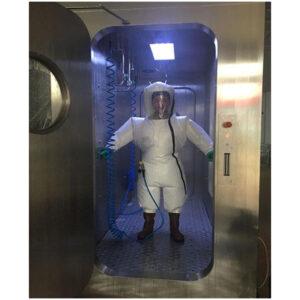
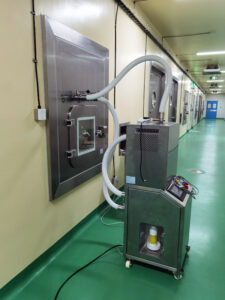
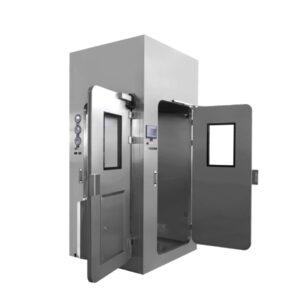
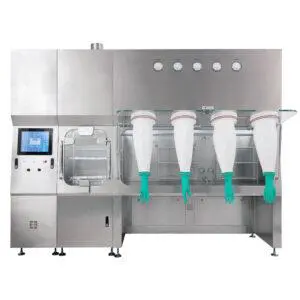
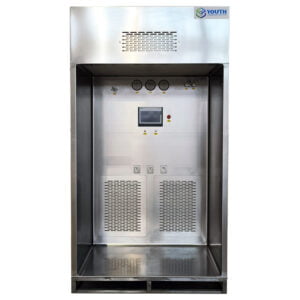
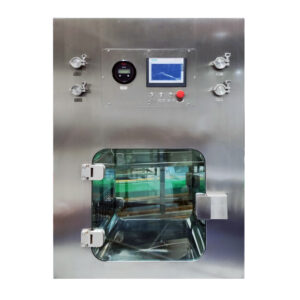
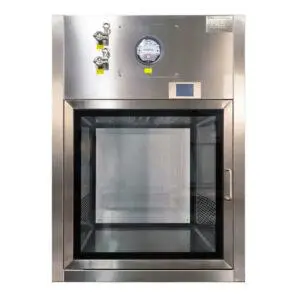
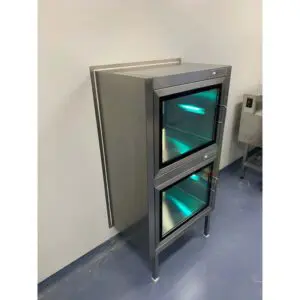
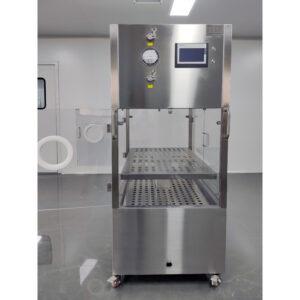
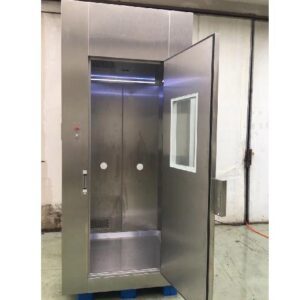
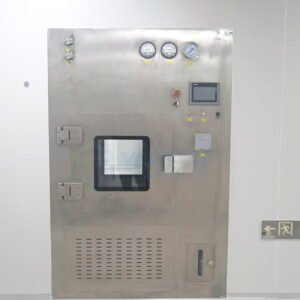
Load size and transfer frequency affect which route is workable. A part moved occasionally and individually can reasonably pass through equipment sized and operated for discrete transfers, such as a Static Pass Box / Transfer Hatch, where the defined boundary benefits from a physical interlocked barrier between two environments. A part moved in volume, on a repeating basis, or as part of a larger batch may instead depend on Cleanroom Carts & Trolleys that carry multiple items through a transfer route in a single movement, provided those carts are cleanable and assigned to the correct side of the controlled boundary.
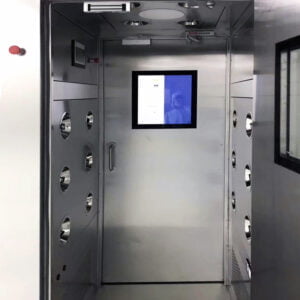
The boundary itself also shapes the choice. A transfer between two spaces with meaningfully different cleanliness or control requirements calls for equipment that enforces separation — a barrier the part cannot bypass without the transfer event being deliberate and visible. A transfer within a single controlled area, where the concern is organizing movement rather than crossing a boundary, has different equipment needs entirely; applying boundary-crossing equipment where none is needed adds handling steps without adding protection, while using open movement where a real boundary exists removes protection the classification already called for.
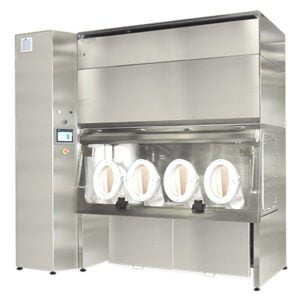
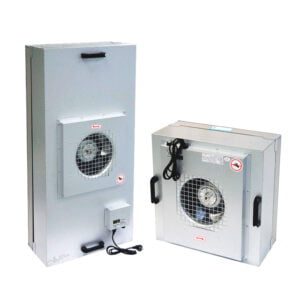
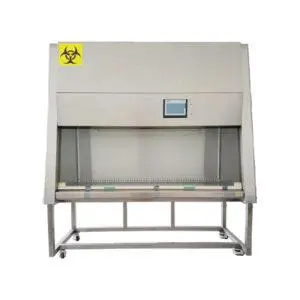
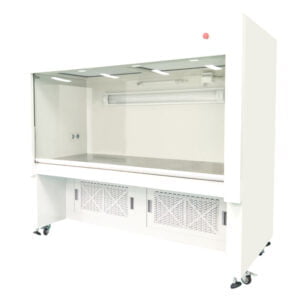
Local clean-air protection at the point of use is a distinct option from either of the above, relevant where the part needs protection during an operation rather than during transfer itself. Selecting among these options requires knowing, for each part class, how it moves, how often, across what boundary, and in what sequence — information the facility has to establish internally before a transfer-equipment conversation with a supplier can be specific rather than speculative. When that information is in hand, it is what a buyer brings into a configuration or quotation review with a supplier such as YOUTH, since equipment sizing, interlock logic, and interface requirements all depend on it.
Control Containers, Carts, Staging, and Status Identification
The equipment chosen for transfer only delivers its intended protection if the containers, carts, staging areas, and status identification around it are controlled with the same rigor as the transfer step itself. A pass box or cart that enforces a clean boundary accomplishes little if the container placed inside it cannot itself be cleaned, or if parts of different acceptance status are staged together without a way to tell them apart.
Containers and carts used in this handling sequence need to be evaluated for cleanability as a condition of their use, not assumed to be acceptable because they are made of an appropriate material. A container that cannot be cleaned effectively becomes a persistent contamination source that defeats the cleaning step performed on the part it carries, regardless of how well the transfer route itself is designed. Where a container is dedicated to one side of a controlled boundary and never crosses it, the cleanability requirement is different than where the same container moves back and forth across that boundary repeatedly.
Staging areas are where classification and boundary decisions either hold or collapse in practice. A staging area that does not physically or visibly separate parts awaiting cleaning from parts already released creates the exact condition the earlier classification work was meant to prevent — contamination traveling alongside clean material because nothing distinguishes them. Status identification exists to solve this, but only if it is maintained consistently and is visible to whoever handles the part next, not just to the person who applied it.
Return traffic — parts, carts, or containers moving back from assembly toward receiving or staging — is a particular point of failure because it was rarely the focus when the forward transfer sequence was designed. A boundary or staging arrangement built only around one-directional flow can be compromised by legitimate return movement that crosses paths the facility did not account for.
Verify Rules at the Assembly Entry Point
| Check under actual operating conditions | Evidence to examine at the assembly entry point | What the finding establishes |
|---|---|---|
| Status separation | Whether parts with different acceptance, cleaning, or release status become mixed in staging or transfer | Whether status identification and staging preserve the intended release boundary |
| Return traffic | Whether return movement crosses or disrupts the planned incoming-part handling sequence | Whether the transfer route maintains the defined boundary during real operation |
| Container cleanability | Whether the containers used in the sequence can be cleaned effectively | Whether container use supports, or defeats, the planned cleaning rule |
| Protection after cleaning | Whether cleaned parts remain protected through staging and transfer to exposed assembly | Whether the benefit of the permitted cleaning step is preserved until entry |
| Release control | Whether the designated release decision occurs before the part reaches exposed assembly | Whether the planned release boundary operates at the intended point |
The rules established for classification, boundaries, equipment, and staging only have value if they hold at the point where an incoming part actually enters exposed assembly, under real operating conditions rather than as described on paper. Verification at this point is where gaps between the documented rule and the practiced behavior become visible.
Status separation is the first thing to examine, because a staging or transfer arrangement that looks adequate in isolation can still permit parts of different acceptance status to mix once real traffic and real time pressure are introduced. If that mixing occurs, the status identification system is not achieving its purpose regardless of how it was designed. Return traffic deserves the same scrutiny: a transfer route that performs correctly for forward movement can still be compromised if return movement is allowed to cross the same path without a defined control.
Container cleanability should be confirmed under actual use, not only specified in procurement, since a container’s suitability can change with wear, repeated handling, or exposure the original selection did not anticipate. Similarly, the protection applied to a part after cleaning needs to be checked for whether it survives staging and transfer intact — a cleaning step whose benefit is lost before the part reaches assembly has not actually reduced the risk it was meant to address.
Release control is the last and most direct check: whether the designated release decision is genuinely occurring before the part reaches exposed assembly, made by the role assigned to it, rather than being assumed, skipped under time pressure, or performed after the fact. ISO 14644-5:2025 addresses operational controls of this kind at a broad scope level, and the specific passage relevant to a given facility’s incoming-part handling should be read directly rather than assumed from its title, since neither that standard nor ISO 14644-4:2022’s design and start-up provisions prescribe a universal incoming-part procedure that a facility can adopt without adapting it to its own classification and boundary decisions. Where this verification step identifies a gap, the correction belongs at the rule or equipment level — including the facility’s working relationship with its transfer and containment equipment supplier — rather than relying on individual operator diligence to compensate for it indefinitely.
Frequently Asked Questions
Q: Can every incoming part follow the same cleaning and transfer rule?
A: No. Group parts by exposure state, supplier packaging, visible soil, cleanability, material sensitivity, and the consequence of carrying contamination into exposed assembly, then set acceptance, protection, and release rules for each group.
Q: Where should outer packaging be removed?
A: Remove it at the project-defined boundary that keeps uncontrolled packaging from compromising clean handling. Base that location on the part’s exposure state and supplier packaging, and specify what must be inspected before the part moves forward.
Q: What information is needed before selecting a pass box, cart, container, or local clean-air protection?
A: Establish the load size, transfer frequency, cleanroom boundary, and complete handling sequence first. Then check whether the chosen route and equipment can carry the load while preserving its cleaning, protection, status, and release controls.
Q: What should happen when a part or its container cannot tolerate the planned cleaning method?
A: Do not release it to exposed assembly under that method. Verify which permitted method the material and container can tolerate, whether it can clean them effectively, and how the part will remain protected afterward before defining its disposition.
Q: How can a team confirm that incoming-part rules work in real operation?
A: Observe representative transfers at the assembly entry point. Check for mixed release status, disruptive return traffic, containers that cannot be cleaned effectively, loss of protection after cleaning, and parts reaching assembly before the designated release decision.