Two bids can price the same room identically and still describe two different scopes. Before any number on a bid tabulation means anything, the buyer has to know whether the line items underneath it are actually the same commitment, built to the same basis, with the same party responsible for closing the gaps. Without that check, a lower total can simply reflect a smaller scope rather than a better price.
Set one comparison baseline before opening commercial differences
A bid comparison fails when it is organized around how each supplier chose to present their offer rather than around what the project actually needs. Suppliers structure proposals differently: one may group equipment by system, another by room, another by trade package. If the comparison follows those headings, the reviewer is really comparing table-of-contents structures, not scope.
The fix is to build one line-item schedule drawn from the project’s own requirements — the rooms, equipment families, interfaces, and deliverables the project defines — and then slot each supplier’s content into that fixed structure. This is the baseline the rest of the comparison depends on. If a bid does not address a line in the schedule, that absence is itself information: either the item is excluded, bundled elsewhere, or simply missed in preparation.
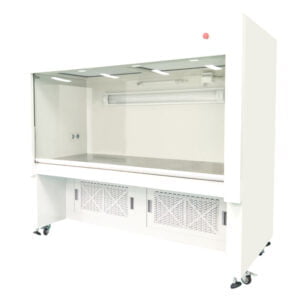
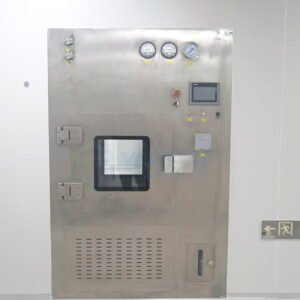
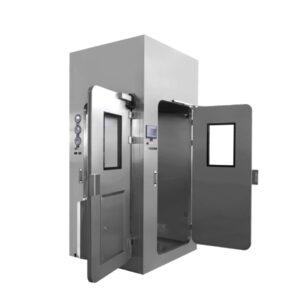
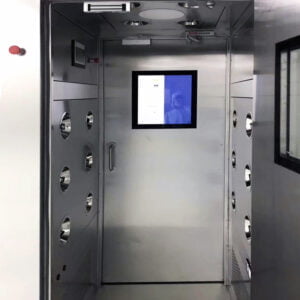
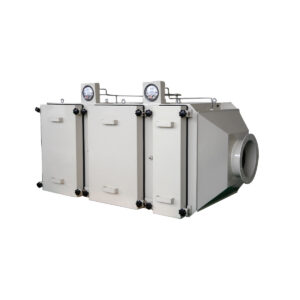
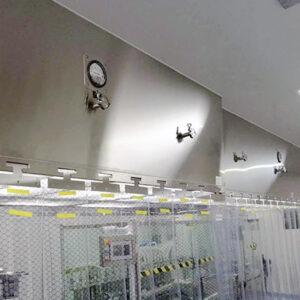
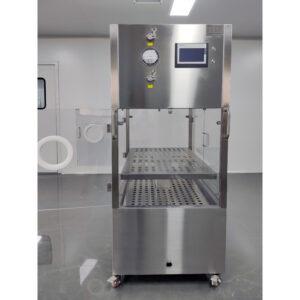
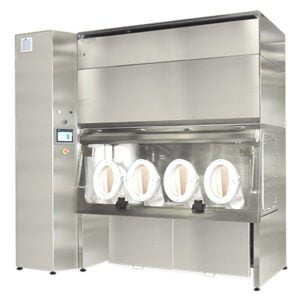
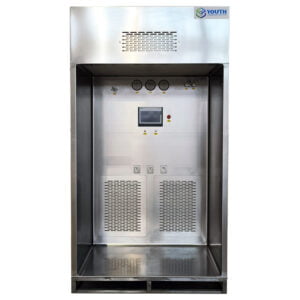
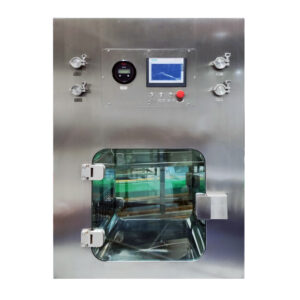
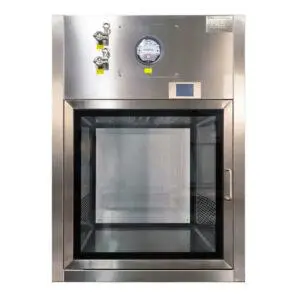
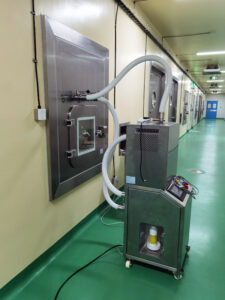
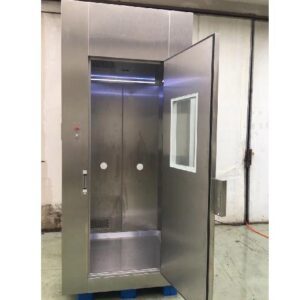
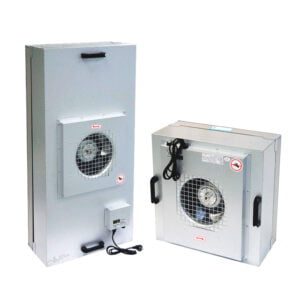
Where the project scope spans multiple equipment families — room-air equipment, transfer and entry equipment, local work-zone equipment — the baseline schedule should keep those families distinct rather than collapsing them into generic “equipment” lines. A pass box and a laminar airflow unit serve different protection objectives, and treating them as interchangeable line items obscures whether each bid actually addresses the room’s full configuration or only part of it.
Once the baseline exists, the reviewer can ask a sharper question for each line: not “what did this supplier propose” but “what did this supplier commit to for this exact line, and on what basis.” That question only has a stable answer if the schedule itself does not shift between suppliers. If the project team changes the baseline mid-review — adding or splitting lines because one supplier’s packaging made sense — the comparison loses its reference point and earlier conclusions about other bids become unreliable. The baseline is set once, from the project’s requirements, before any bid is opened against it.
This matters most where the project involves coordinated interfaces — for example, equipment that depends on room envelope components, utility connections, or control integration supplied by another party. A baseline that only lists equipment and omits the interface points will let a bid look complete on price while leaving a coordination gap unpriced by anyone.
Normalize equipment quantities, materials, controls, and performance bases
| Comparison field | Common baseline to record | Difference the comparison should expose |
|---|---|---|
| Equipment quantity | Quantity for each common line item | Different quantities or a missing line item |
| Performance basis | Performance basis used for each line item | Prices based on different performance bases |
| Materials | Material basis used for each line item | Material differences hidden by supplier packaging |
| Controls | Control scope included with each line item | Controls included in one bid but optional or excluded in another |
Once the baseline schedule exists, the next task is confirming that each supplier priced the same thing under that line, not just gave it the same name. Equipment descriptions can match in words while differing in the basis that drives cost and performance.
Quantity is the simplest check and the easiest to miss: a bid can show a lower unit price while specifying fewer units, or combine units differently than the schedule calls for, so the per-line total looks competitive without the aggregate scope matching. Where a project requires a defined count of room-air or work-zone equipment, the comparison should confirm that count against the line, not against the bid’s narrative description.
Performance basis is less visible but changes more. The same equipment category can be offered against different operating assumptions — different airflow conditions, different duty expectations, different environmental conditions the equipment is sized for. A price built on a lighter performance basis will generally be lower, but it is not a lower price for the same commitment; it is a price for a different commitment that happens to share an equipment name. Where the project’s performance basis is not stated precisely in the inquiry, suppliers will reasonably fill the gap with their own assumptions, and those assumptions then diverge silently across bids.
Materials follow the same logic. Two bids can list the same component family while specifying different material grades for contact surfaces, enclosures, or filtration media housings. Material choice affects compatibility with the process environment and affects cost, so a material substitution that looks like a minor spec note can carry real consequence for suitability.
Controls are where bundling most often hides a difference. One supplier may include monitoring, interlocks, or control integration as part of the base equipment; another may treat the same control scope as a separate, optional addition. If the comparison only looks at the headline price for the equipment line, the bid that excluded controls will appear cheaper for reasons that have nothing to do with efficiency — it has simply moved cost to a different line, or out of the bid entirely.
For each of these four elements, the governing question is the same: does the stated basis match across bids, and if not, which basis does the project actually require? That second question sometimes cannot be answered from the bid alone, because the original inquiry may not have specified a single basis for the suppliers to price against — in which case the gap belongs to the project’s request for quotation, not to the suppliers’ judgment.
Separate base price from options, exclusions, provisional sums, and third-party work
| Commercial treatment | What to show separately | Why it matters to the normalized total |
|---|---|---|
| Base price | Included line items and quantities | Establishes the starting total after the scope is matched |
| Options | Each option and its separately stated price | Keeps optional scope out of the base comparison |
| Provisional sums | Each provisional item and stated amount | Keeps provisional pricing visible instead of treating it as base scope |
| Exclusions | Each excluded line item or interface | Reveals work absent from the supplier total that may be priced elsewhere |
| Owner-supplied work | Each item assigned to the owner | Accounts for scope outside the supplier total |
| Third-party services | Each service and where its price sits | Shows whether the service is inside the supplier total or priced elsewhere |
A bid total is not one number; it is several categories of commitment added together, and each category carries a different kind of certainty. Comparing totals before separating these categories compares arithmetic, not scope.
Base price should reflect only what the supplier has committed to deliver at the stated terms, for the line items and quantities the schedule defines. Options sit outside that commitment: they are available but not included unless separately selected, and their price is only real if the project actually wants that scope. A bid that quietly folds what another bid treats as optional into its base price will show a higher base number while actually offering more — the opposite of what an unexamined total comparison suggests.
Provisional sums are a different kind of uncertainty: an amount set aside for work whose extent is not yet fully defined, often because it depends on conditions not yet confirmed at the time of bidding. A provisional sum is not a firm price; it is a placeholder that will be adjusted once the actual scope is known. Treating a provisional sum as equivalent to a firm base-price line item overstates the bid’s reliability.
Exclusions name what the supplier’s total does not cover — work, interfaces, or equipment absent from their number entirely. An exclusion is only safe if the project team knows who is covering that scope and at what cost; an unaddressed exclusion is a cost that exists somewhere but has not yet been assigned to a line in any bid.
Owner-supplied work and third-party services complicate the comparison further because they may be priced inside one supplier’s total and outside another’s. If one bid assumes the owner will supply a given interface and another assumes the supplier will provide it, the two totals are not measuring the same boundary of responsibility even if every other line matches.
The practical discipline is to decompose every bid into these categories before any total comparison happens, and to ask, for each exclusion or provisional item, what it would cost to close and who is expected to close it. A bid that looks lowest on its stated total can carry the largest unpriced scope once exclusions and provisional sums are accounted for.
Compare documents, tests, delivery terms, spares, and site support line by line
| Scope line | Compare in every bid | Boundary to resolve |
|---|---|---|
| Documents | Documents included | Whether the document scope is in the base price, optional, or excluded |
| Tests | Tests included and acceptance responsibility | Whether the same tests and the same responsibility are being priced |
| Delivery | Delivery terms and delivery point | Where the supplier’s priced delivery scope ends |
| Spares | Spares included | Whether the spare scope is in the base price, optional, or excluded |
| Site support | Site work and support included | Whether the work is assigned to the supplier, owner, or a third party |
Equipment pricing differences are usually visible because they attach to a named component. Differences in documents, tests, delivery terms, spares, and site support are easier to miss because they attach to scope that does not appear as a line item unless the reviewer asks for it specifically.
Documentation scope varies in what is included, not just in whether documentation exists at all. A bid may include design documentation but treat qualification or verification documentation as a separate cost, or vice versa. Where the project’s intended use requires a defined verification pathway — the kind addressed in frameworks such as ISO 14644-4, which covers cleanroom design, construction, start-up, and the associated verification process — the documents needed to support that pathway should be identified in the schedule and checked against each bid, since the standard itself does not prescribe which contractual party delivers them.
Tests follow a similar pattern: two bids can both say “testing included” while meaning different test scopes, different acceptance criteria, or different parties responsible for witnessing and accepting results. A test performed and accepted by the supplier’s own team carries a different weight than one requiring independent witness or owner sign-off, and the bid should state which arrangement applies.
Delivery terms define where the supplier’s priced responsibility ends — at the factory, at the site boundary, or after installation and commissioning. A lower price paired with a delivery point further upstream is not necessarily a lower delivered cost; the gap between the stated delivery point and the project’s actual need is scope the project will have to cover through another party.
Spares and site support are frequently treated as afterthoughts in a technical evaluation but behave exactly like any other scope line: either they are included in the base price, available as an option, or excluded entirely. A bid silent on spares has not avoided the question — it has left the answer undefined, which becomes a cost and lead-time question later rather than a comparison question now.
Convert accepted clarifications into the final scope and price schedule
| Clarification type | Agreed scope entry | Agreed price entry |
|---|---|---|
| Inclusion or exclusion | Exact line item or interface included or excluded | Base, option, provisional, owner-supplied, third-party, or otherwise priced elsewhere |
| Quantity, performance basis, materials, or controls | Agreed basis for the affected line item | Price tied to that agreed basis |
| Documents, tests, or acceptance responsibility | Agreed document, test, and responsibility boundary | Included, optional, excluded, or separately priced treatment |
| Delivery, spares, or site support | Agreed delivery point, spare scope, or work assignment | Base, optional, owner-supplied, third-party, or otherwise priced elsewhere |
Comparing bids exposes differences; resolving them requires a written answer, and that answer only has value once it is carried forward into the documents that will govern the actual project. A clarification that exists only as an email exchange or a verbal confirmation during a review meeting has not yet changed the contract — it has only changed what the project team believes the contract will say.
The discipline here is mechanical but easy to skip under schedule pressure: for every material exception identified while normalizing quantities, performance basis, materials, and controls, or while separating base price from options and exclusions, or while comparing documents, tests, delivery terms, spares, and site support, the project team sends a written clarification request, receives a written answer, and then transfers that answer into two places — the final scope description and the final price schedule. If the clarification changes what is included, the scope document must say so explicitly, naming the line item or interface affected. If the clarification changes which price category an item sits in — moving something from excluded to included, or from provisional to firm — the price schedule must reflect that reclassification with the same specificity.
This conversion step is where comparison work either holds or dissolves. A clarification that resolved an apparent conflict between two bids, but that never makes it into the signed schedule, leaves the project exposed to exactly the ambiguity the comparison was meant to eliminate — except now there is a false sense that the issue was already resolved. Where the original request for quotation did not specify a single performance basis or control scope, and a clarification later fixed that basis for one or more suppliers, the final schedule needs to state the agreed basis explicitly rather than relying on the clarification record as a separate, informal document.
For equipment interfacing with broader room or system delivery — including configurations drawing on modular cleanroom construction or an integrated cleanroom system — the final schedule is also where the project confirms that the clarified equipment scope aligns with the room-level interfaces it depends on, since a clarification agreed at the equipment level can still leave a boundary with room envelope or utility scope unresolved if it is not checked against the full schedule before the contract is finalized.
Frequently Asked Questions
Q: How can I tell whether the lowest cleanroom bid is actually the lowest comparable offer?
A: Recalculate each offer against the same required scope and technical basis. Keep options and provisional sums visible, and account for excluded, owner-supplied, or third-party work separately so a low supplier total does not hide costs assigned elsewhere.
Q: What should be fixed before suppliers are asked to clarify their bids?
A: Fix the common comparison basis first: line-item quantities, performance basis, materials, controls, required documents and tests, delivery point, spares, site support, and acceptance responsibility. This lets each clarification resolve a named difference instead of changing the baseline during evaluation.
Q: How should a vague exclusion such as “by others” be handled?
A: Treat it as an unresolved interface until the work and responsible party are named in writing. The clarification should also state whether the related cost is included, optional, provisional, owner-supplied, third-party, or otherwise priced outside the supplier total.
Q: Does a reference to ISO 14644-4 make two cleanroom bids equivalent?
A: No. ISO 14644-4 provides a cleanroom design, construction, start-up, and verification lifecycle reference, but it does not by itself define the technology, equipment scope, or contractual delivery method. Compare the actual scope, technical basis, deliverables, tests, and responsibilities stated in each bid.
Q: When is a clarified bid ready to become the contract scope?
A: It is ready only after every material agreed clarification appears in the final scope schedule and its matching price treatment. Check that quantities, technical bases, interfaces, documents, tests, delivery terms, spares, site work, and acceptance responsibilities are tied to the same final price schedule.