When a cleanroom project reaches practical completion, the question is not whether the room passes its final tests but whether the documents, training, spares, and unresolved items are organized well enough for the owner to accept formal responsibility for it. A facility manager who signs for handover without a clear scope inherits whatever gaps exist in that scope, often without realizing it until a filter needs replacing or an auditor asks for a record that was never delivered. Getting handover scope right is a matter of sequencing and ownership as much as paperwork.
Start the handover index from the contracted deliverable list
| Project point | Handover-index action | Decision consequence |
|---|---|---|
| Contracted deliverables | Create the initial index from the contracted deliverable list | Establishes the agreed starting scope for handover evidence |
| Design | Update the same index during design | Keeps the index current before startup |
| Manufacture | Continue updating the index during manufacture | Keeps manufacture-stage deliverables within the same handover control |
| After startup | Do not wait until this point to assemble the first index | Starting here is later than the stated design-and-manufacture update cycle |
The handover index is the single document that tells everyone what “complete” means for this project. Its starting point matters because an index assembled only after startup tends to reflect what happens to exist at that moment rather than what the contract actually requires. Working backward from whatever manuals and certificates landed in a folder is a different exercise from working forward from an agreed deliverable list, and the two produce different gaps.
Building the index from the contracted deliverable list fixes the scope before design and manufacture activities start generating the records that will eventually populate it. This matters because a cleanroom project produces most of its documentation incrementally: drawings get revised as design develops, equipment data sheets arrive as components are selected, and test records accumulate as systems are built and verified. If the index is created early and treated as a living document, each of these items can be logged against its contracted requirement as it becomes available. If the index is created late, the project team is instead trying to reconstruct, after the fact, what should have been produced at each stage — a harder and less reliable task, because stage-specific records are much easier to request while that stage is still open than after the team or contractor has moved on.
The consequence for the buyer is direct: an index maintained during design and manufacture allows discrepancies to surface while there is still time to correct them — a missing certificate can be requested before the supplying party demobilizes, a drawing revision can be reconciled before it affects downstream coordination. An index assembled only at the end converts every gap into a closeout dispute instead of a routine update.
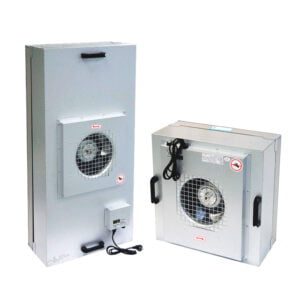
This is also the point where the owner’s project information and the supplier’s scope of work need to align. Where YOUTH is supplying equipment such as modular cleanroom components or integrated cleanroom system elements into a project, the deliverable list the owner contracts for should specify which records are expected from that equipment scope specifically — test records, certificates, operation instructions — so that the index reflects an agreed, equipment-by-equipment expectation rather than a generic assumption about what “should” be included. The practical question for the buyer is not whether an index exists, but whether it was built from the contract and kept current, or compiled retroactively.
Organize as-built drawings, technical records, manuals, and test evidence by issuer
| Record class | Classification check | Evidence boundary |
|---|---|---|
| Approved as-built drawings | Keep the approved drawing set identifiable by its responsible issuer | The drawing set records the approved as-built information; it is separate from test evidence |
| Equipment data and certificates | Keep equipment data and certificates distinguishable and traceable to their responsible issuers | These technical records are separate from software, manuals, and test records |
| Test records | Identify the test record, responsible issuer, and reported cleanroom performance parameter | ISO 14644-3 supports test methods and procedures; it does not set a universal project acceptance limit |
| Software or settings | Record delivered software or settings separately and identify the responsible issuer | A software or settings record is separate from operation and maintenance instructions |
| Operation manuals | Classify operation instructions under their responsible issuer | Operation instructions are distinct from maintenance instructions |
| Maintenance instructions | Classify maintenance instructions under their responsible issuer | Maintenance instructions are distinct from operation manuals |
Handover documentation fails less often from missing content than from unclear ownership of content that does exist. A drawing set, a certificate, a test record, and an operation manual each answer a different question and come from a different responsible party, and treating them as interchangeable “documentation” obscures which issuer is accountable for which gap.
As-built drawings record what was actually installed, which may differ from design drawings where field conditions required changes; their value depends on them being the approved, current revision, not an earlier design issue. Equipment data and certificates establish what a component is and how it was verified by its manufacturer, which is a different claim from how the installed system performs as a whole. Test records report specific performance parameters measured under a stated method; a test record format is described under ISO 14644-3, which defines test methods and procedures for cleanroom and clean-zone performance parameters but does not itself set a universal acceptance limit for a project, meaning that whatever limit the result is checked against must come from the project specification, not from the test standard itself. Software or settings records capture configuration data that an operator cannot easily reconstruct from observation alone. Operation manuals and maintenance instructions, though often bound together, serve different users and different moments: one supports routine running, the other supports intervention, and conflating them risks a technician consulting the wrong document under time pressure.
Where a project involves multiple suppliers or contractors, each issuer should be identifiable against their respective records, because a missing or disputed item is far easier to resolve when it is clear whose responsibility it was to supply. A buyer reviewing a handover package should be able to trace every document back to the party that issued it, rather than receiving an undifferentiated bundle where accountability has been lost in assembly. This issuer-level traceability is also what allows the open-item register, addressed later, to assign a closure owner meaningfully rather than defaulting every outstanding item to the main contractor by default.
Define training content, attendees, records, and any competence evidence
| Training control | Handover evidence | Decision boundary |
|---|---|---|
| Audience | Defined training audience | Identifies who the training is intended for |
| Prerequisites | Listed prerequisites | Identifies the conditions set before the training |
| Agenda | Defined agenda | Identifies the planned training content |
| Language | Stated training language | Identifies the language in which the training is to be delivered |
| Attendance | Attendance record | Shows who attended; it does not by itself establish competence |
| Competence | Competence evidence where required by the contracted support level | Treat as a contract-specific requirement rather than a universal handover requirement |
Training is frequently treated as a single checkbox in a handover schedule, but it carries several distinct components that need to be defined separately if the training is to be verifiable later rather than merely asserted. Who the training was intended for, what prerequisite knowledge it assumed, what content it covered, and what language it was delivered in are four different specifications, and a training record that only confirms a session occurred does not establish any of them.
This distinction matters because the contracted support level, not a general assumption about training, determines what evidence is actually required. Some projects require only that relevant staff attended a session covering defined content; others require documented competence, meaning the recipient must demonstrate understanding or capability, not just presence. Attendance and competence are not the same claim: an attendance record shows who was in the room, while competence evidence shows that the training achieved its intended effect on the trainee’s ability to operate or maintain the equipment. Where a contract specifies competence evidence and only an attendance sheet is produced, that gap should be treated as an open item rather than assumed to be covered by the attendance record.
The audience and prerequisite definitions also matter for interpreting whether the training was adequate for its purpose. Training pitched at an operator audience will not substitute for training that a maintenance team needs if the equipment requires different depth of understanding for routine use versus for service interventions. Where language was not explicitly recorded, the project loses the ability to confirm that content was actually understood by non-native-language attendees, which becomes relevant if a dispute later arises about whether proper instruction was given.
The practical task for the buyer is to check the training record against what the contract specifies for that support level — content, audience, language, and whether competence evidence was required — rather than accepting a generic attendance record as automatically satisfying whatever the contract actually demands.
Reconcile spares, warranties, software or settings, and maintenance information
These four items are grouped because they share a common failure mode: each is easy to overlook at handover precisely because the project appears functionally complete without them, yet each becomes difficult to obtain later once the supplying parties have demobilized. Spare parts lists, where incomplete or unmatched to the as-installed configuration, leave the facility unable to source replacement components quickly when something needs replacing, because the installed equipment’s exact specification may not match a generic catalog entry. Warranty terms, where not clearly reconciled against the handover date, create ambiguity about when coverage starts and what triggers it, particularly where commissioning extended over multiple stages rather than concluding on a single date.
Software or settings present a distinct risk because they are intangible and often exist only in a configured device rather than in a separate document; where this configuration data is not captured and handed over in a retrievable form, the facility may be unable to restore settings after a fault or a component replacement without contacting the original supplier. Maintenance information, including schedules, procedures, and any manufacturer-specified intervals, needs to be reconciled against the as-built equipment list so that nothing installed is left without a corresponding maintenance instruction.
Reconciliation, in this context, means checking each of these four categories against what the contract specified and what the as-built condition actually is, rather than assuming that because a project closed out formally, each item was automatically delivered in full. Where a gap is found — a missing spares list, an unclear warranty start date, an unrecovered settings file — the appropriate response is to log it as an open item with a named closure owner rather than deferring it informally, because informal deferrals are what tend to disappear once the project team disperses. This reconciliation step connects directly to the open-item register that follows, since any shortfall identified here needs the same closure-owner discipline applied to defects and missing documents.
Control defects, missing documents, temporary arrangements, and conditional acceptance
| Condition | Open-item register entry | Release treatment |
|---|---|---|
| Commissioned status | State the current commissioned status | Read the status together with unresolved items; status alone does not close them |
| Outstanding defect | Identify the defect and its named closure owner | Keep the defect open until its closure is recorded |
| Missing or withheld document | Identify the document, responsible issuer, and named closure owner | State the item as conditional if release proceeds while it remains outstanding |
| Temporary arrangement | Identify the temporary arrangement and its named closure owner | Keep the arrangement visible as an unresolved release condition |
| Conditional acceptance | State what is accepted and what remains conditional | Prevents conditional items from being presented as fully closed |
Few cleanroom projects reach handover with every defect resolved, every document delivered, and every arrangement in its final form. The handover scope question is not whether this condition exists but how it is controlled: whether outstanding items are visible, assigned, and tracked, or whether they are quietly absorbed into an informal understanding that everyone involved will “deal with it later.”
A commissioned status statement is useful but incomplete on its own — a system can be reported as commissioned while unresolved defects remain open against it, so the status and the defect list need to be read together rather than treating a positive commissioning statement as evidence that nothing remains outstanding. An outstanding defect needs to be identified specifically and assigned a named party responsible for closing it; without that assignment, the defect exists as an acknowledged fact with no mechanism for resolution. The same applies to missing or withheld documents: identifying that a document is absent is different from assigning responsibility and a path for obtaining it.
Temporary arrangements deserve particular attention because they are the category most likely to become permanent by default if not actively tracked. A temporary bypass, a provisional setting, or an interim procedure installed to allow commissioning or partial occupancy to proceed can remain in place indefinitely once the project team’s attention moves elsewhere, unless it is explicitly logged as unresolved and revisited.
Conditional acceptance is the mechanism that allows a project to proceed toward release without pretending that every item is closed. It requires stating plainly what is accepted outright and what is accepted only on the condition that specific remaining items will be addressed. The risk this structure is designed to prevent is a conditional item being presented, through accumulated time or inattention, as though it had been fully closed when it was never resolved. Where a buyer reviews a conditional acceptance, the relevant check is whether each conditional item still carries a visible status and an assigned path to closure, not merely whether the acceptance document exists.
Release the project only with named owners and closure dates for open items
Final release is the point where the handover scope either holds together as an accountable structure or dissolves into informal goodwill. An open-item list without named owners and closure dates is a record of problems, not a mechanism for resolving them — it documents what remains outstanding without creating any obligation on a specific party to address it by a specific point.
Naming a closure owner for each item ties it to a party capable of acting on it, drawing on the issuer-level traceability established earlier when records and defects were organized by responsible party. An item without a named owner tends to default to whichever party is easiest to reach after handover, which may not be the party actually responsible for resolving it, and this mismatch is what allows items to remain open indefinitely.
A closure date gives the open item a horizon. Without one, “open” and “closed” become matters of informal judgment rather than verifiable fact, and conditional acceptance risks drifting into unconditional acceptance simply through the passage of time rather than through the actual resolution of the condition.
Where the project’s open items are dominated by documentation gaps rather than physical defects, the closure path may run primarily through named issuers delivering outstanding records by a set date — a comparatively administrative resolution. Where open items include unresolved defects or temporary arrangements affecting how the room or its equipment is intended to function, closure may instead depend on a defined scope of remedial work being completed and verified before the condition can be marked resolved — a different kind of resolution with a different evidence requirement. Both paths belong in the same register, but they are not interchangeable in what “closed” will actually require.
Release should state explicitly what is accepted without condition, what remains conditional, and who holds responsibility for closing each conditional item by when. This is the structure that lets the owner take over the facility while still being able to hold specific parties to specific remaining commitments, rather than inheriting an undifferentiated set of loose ends at the moment of handover.
Frequently Asked Questions
Q: Can a cleanroom be released when some handover items are still open?
A: It can proceed only as a clearly conditional release. State what has been accepted, list each outstanding defect, missing document, or temporary arrangement, and assign a closure owner and date so unresolved items are not presented as complete.
Q: What project information should be agreed before handover training is scheduled?
A: Define the audience, prerequisites, agenda, delivery language, and required attendance record in advance. Also confirm whether the contracted support level requires competence evidence, because attendance alone does not demonstrate competence.
Q: How should a buyer decide whether a test record supports project acceptance?
A: Match the record to the tested cleanroom performance parameter, responsible issuer, and the project’s agreed acceptance criteria. ISO 14644-3 supports test methods and procedures, but it does not provide one universal acceptance limit for every project.
Q: What should be checked when spares, warranties, software, or settings are handed over?
A: Reconcile each delivered item against the contracted deliverable list and keep its identity, issuer, and status distinguishable from manuals and test records. Record anything missing or withheld in the same open-item register used for release decisions.
Q: How can the team prevent missing handover evidence from being discovered only at startup?
A: Create the handover index from the contracted deliverables and maintain it through design and manufacture. Regular updates expose missing issuers, records, training requirements, and reconciliation items while there is still time to assign and close them.