Specifying a pre-air filter for a cleanroom supply path is not the same exercise as specifying one for a general-ventilation system, even when the component itself looks similar on a datasheet. The question a buyer must answer early is which parts of the specification describe the component and which parts describe how that component must behave once it sits inside a controlled environment with interfaces, monitoring, and change records attached to it.
What both specifications must define about the filter duty
Any pre-air filter specification, cleanroom or general HVAC, has to start from the same basic description: what duty the filter performs, what physical dimensions it must fit, what airflow it is rated against, what classification basis establishes its rating, and what resistance data accompanies that rating. These five elements are not optional in either context because without them a filter cannot be selected, compared, or ordered at all. A duty statement tells the specifier what role the filter plays in the air path; dimensions tell the installer what envelope it must occupy; airflow sets the operating point that every other figure depends on; the rating basis tells a reviewer which classification system was used; and resistance data tells a system designer what pressure drop to expect at that airflow.
Where this becomes a judgment rather than a checklist is in how much weight each element carries once the end-use changes. In a general-ventilation system, these five elements are often sufficient to close out the specification, because the filter’s downstream consequence stops at comfort air quality or equipment protection inside standard ductwork. In a cleanroom project, the same five elements remain necessary but stop being sufficient, because the filter stage now sits upstream of a controlled environment whose acceptance depends on more than the component rating. The duty statement that would satisfy a general-ventilation reviewer may leave a cleanroom reviewer unable to confirm whether the stage interfaces correctly with downstream HEPA or ULPA filtration, room pressurization, or the monitoring scheme the facility uses.
This distinction matters most at the moment a specification is handed from one party to another: an EPC contractor passing a filter schedule to a supplier, or a facility manager reviewing a submittal against a validation master plan. If the handoff only carries the five basic elements, the receiving party has a complete component description but an incomplete project description. The buyer’s task at this stage is to decide, for the specific project, whether the basic duty description is being asked to do all the work or whether it is one layer in a larger specification that still needs the project-specific layer added. That decision depends on where the filter sits in the air path and what downstream equipment or monitoring depends on its performance remaining stable.
General-HVAC rating and resistance data for the component
| Component data | What to specify | What it establishes | What it does not establish |
|---|---|---|---|
| Filter duty | Defined duty and application context | The intended role of the component | Cleanroom qualification or installed performance |
| Dimensions | Project-required dimensions | The required physical filter size | Cleanroom interface suitability by itself |
| Airflow | Airflow used for the specification | The operating point for related component data | Installed cleanroom performance |
| Rating basis | General-ventilation classification basis, including ISO 16890 ePM where applicable | How the component rating is classified | HEPA or ULPA classification |
| Resistance data | Resistance data tied to the stated duty and airflow | The component data available for comparison | Installed cleanroom verification |
The classification basis is where a general-ventilation specification and a cleanroom specification start to diverge in substance rather than just in paperwork. A general-ventilation pre-air filter is typically rated against an ePM-based classification system such as ISO 16890, which establishes how the filter performs against particulate matter under defined test conditions for general ventilation duty. This classification answers a narrow question: how does this component behave as a general-ventilation filter. It does not answer, and was never intended to answer, how a downstream HEPA or ULPA stage will perform, or how the installed cleanroom will test once the filter is in place.
The practical risk is treating a strong general-ventilation rating as if it transfers forward into cleanroom assurance. It does not, because the classification basis and the installed performance test belong to different evidence levels. A filter with a well-documented ISO 16890 classification has told the buyer how the component is expected to perform as a general-ventilation filter at a stated airflow; it has not told the buyer anything about how the cleanroom’s final particle counts, air changes, or pressure cascade will measure once construction and start-up are complete. Keeping these separate is not a formality – it determines what a submittal review can and cannot approve. A reviewer who accepts a component rating as proof of installed performance has approved the wrong evidence for the claim being made.
Resistance data carries a parallel condition. Resistance figures tied to a stated duty and airflow describe the component’s behavior at that operating point; they do not describe how the component will behave once it is part of an assembled filter train with upstream and downstream stages, ductwork transitions, and whatever access or seal arrangement the project uses. Where the airflow in service differs from the airflow the resistance data was generated against, the figures on the component datasheet stop being a reliable predictor of system behavior, and the buyer needs a value recalculated or confirmed for the actual operating condition rather than a reused catalog number.
Cleanroom interfaces, access, monitoring, and record needs
| Project-controlled item | What project documents should make explicit | Decision supported |
|---|---|---|
| Drawings | Required drawings and filter-stage interfaces | Whether the intended interface is defined for design and start-up |
| Materials and seals | Project-specific material and seal details | Whether those details are identified for engineering confirmation |
| Access provisions | Access required by the actual project | Whether required access is included in project scope |
| Monitoring interfaces | Monitoring interfaces required by the project | Whether the component and monitoring boundary is explicit |
| Change records | Change records required for the project | What changes must remain traceable in project records |
| Qualification responsibilities | Project-specific qualification responsibilities | Who must supply and review the required qualification evidence |
Once a pre-air filter is destined for a cleanroom air path, the specification has to grow beyond the component description to cover how the filter stage interfaces with everything the controlled environment depends on. This is the layer that a general-ventilation specification has no reason to include, because general ventilation does not carry the same downstream consequence for classification, containment, or qualification.
Drawings are the first place this shows up. A cleanroom project needs the filter-stage interface shown on drawings used for design and start-up, not just listed on a component schedule, because the people responsible for construction and commissioning need to see how the stage connects to adjoining ductwork, housings, or room boundaries. Where that interface is left undrawn, the construction and start-up teams are working from assumptions rather than a confirmed design intent, and discrepancies tend to surface only once installation is already underway.
Materials and seals carry a similar project-specific weight. A general-ventilation filter’s housing and gasket materials may be adequate for standard duct conditions, but a cleanroom project may require specific material or seal detailing tied to the room’s classification, chemical exposure, or cleanability requirements. These details have to be identified early enough for engineering to confirm them against the project’s actual conditions rather than discovered during installation.
Access provisions, monitoring interfaces, and change records extend the same logic. Access that a general-ventilation system would never need, because the filter sits behind routine duct access panels, may be a defined project requirement in a cleanroom where filter change has to occur without compromising the controlled space. Monitoring interfaces establish where the component boundary ends and the room’s monitoring system begins, which matters because a filter’s own component rating cannot substitute for the data the monitoring system will later need. Change records exist because a cleanroom project typically carries a documentation trail for anything that could affect validated performance; a component swap that would pass unnoticed in general ventilation becomes a recorded event under cleanroom practice. Qualification responsibilities tie these together by naming who supplies and who reviews the evidence the project’s validation requires, which keeps the responsibility from falling through the gap between supplier and contractor. A buyer preparing a project for supplier review can use these project-controlled items as the checklist for what the component specification is still missing before it functions as a cleanroom specification, and the information a customer provides about these interfaces is what allows a supplier such as YOUTH to configure a filter submittal that actually matches the project’s drawings and access requirements rather than a generic catalog offering.
Installed verification that remains outside the prefilter rating
| Evidence type | Applies to | Boundary |
|---|---|---|
| ISO 16890 component classification | ePM-based classification for general-ventilation filters | Does not classify HEPA or ULPA filters or verify installed cleanroom performance |
| HEPA or ULPA classification | HEPA or ULPA filter classification | Must remain separate from the prefilter’s general-ventilation classification |
| ISO 14644-3 installed testing | Cleanroom and clean-zone performance parameters | Provides test methods; it does not set a universal project acceptance limit or replace a product specification |
| ISO 14644-4 project verification | Cleanroom design, construction, start-up, and verification | Does not prescribe a prefilter grade, product, or contractual delivery method |
A pre-air filter’s own rating, however well documented, cannot answer the question of how the cleanroom performs once installed, and keeping that boundary explicit is what prevents a reviewer from asking a component datasheet to answer a system-level question. ISO 14644-3 sets out test methods for cleanroom and clean-zone performance parameters; it is a method standard, telling the project team how to test, not what number constitutes an acceptable result for a given project. Treating a method standard as if it supplied a universal acceptance limit leads a reviewer to expect a pass/fail answer the standard was never designed to give; the actual limit has to come from the project’s own specification or governing quality system.
ISO 14644-4 sits a level further out, covering cleanroom design, construction, and start-up through to verification, but it likewise does not prescribe a prefilter grade, a specific product, or a contractual delivery method. It tells a project team what phases of verification a cleanroom project goes through and what those phases are meant to establish, without naming which filter grade or vendor satisfies any particular phase. A buyer who expects ISO 14644-4 to name a required prefilter specification is misreading what the standard does.
The clearest boundary to hold onto is between general-ventilation classification and HEPA or ULPA classification. These are different classification systems applied to different filter types for different purposes, and a pre-air filter’s ePM-based rating under ISO 16890 says nothing about whether a downstream HEPA or ULPA filter will achieve its own stated efficiency. Where a project specification blurs these two classification systems together, the resulting submittal review becomes unreliable, because approving a prefilter’s general-ventilation rating does not and cannot verify that the cleanroom’s terminal filtration or installed air quality has been established.
The conditional worth holding in mind here: where a project only needs general-ventilation duty, the component rating and resistance data may be the whole of the required evidence; where a project needs cleanroom qualification, the same component rating is only the starting point, and the installed verification, performed under the cleanroom’s own test methods and acceptance criteria, is a separate body of evidence that has to be assembled and reviewed on its own terms. A buyer evaluating a submittal needs to know which of these two conditions the current project falls under before deciding whether the paperwork in hand is complete.
Evidence package that makes the project boundary explicit
Bringing the component data and the project-interface requirements together into one evidence package is what lets a reviewer see, at a glance, where the component specification ends and the project-specific requirement begins. A pre-air filter submittal that lists duty, dimensions, airflow, rating basis, and resistance data without any reference to drawings, materials and seals, access, monitoring interfaces, change records, or qualification responsibilities is answering only the general-ventilation half of the question. A submittal that adds the project-controlled items without being explicit about which classification system the component rating relies on risks the opposite error, letting a reviewer assume cleanroom-grade assurance from a general-ventilation classification.
The practical task for a project team is to require that both halves appear together and that neither is allowed to stand in for the other. The component half tells the reviewer what the filter is and how it performs at a stated operating point. The project half tells the reviewer how that component connects to the room, who is responsible for confirming the connection, and what records will track any change to it. Where a project’s documentation keeps these halves distinct, a reviewer can accept the component data as component evidence and treat the installed verification, built on standards such as ISO 14644-3 and ISO 14644-4, as the separate evidence that actually closes out the cleanroom’s acceptance.
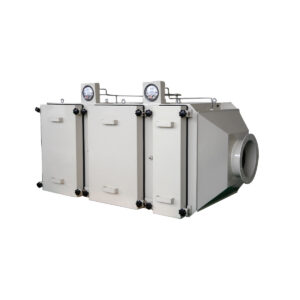
For a buyer moving from this kind of specification review toward a supplier conversation, the exact information still needed is project-specific: which drawings define the filter-stage interface, what material and seal requirements the room classification imposes, what access and monitoring arrangement the facility’s operations group requires, and who within the project carries qualification responsibility. Products such as the panel pre air filter or bag and pocket pre air filter configurations carry their own component-level duty, dimension, airflow, and resistance data, and matching that component data to a specific project’s interface and verification requirements is the step that determines whether a given configuration is actually suitable, which is the coordination a supplier’s quotation review is set up to work through once the project side of the specification has been made explicit.
Frequently Asked Questions
Q: Can a general HVAC pre-air filter specification be reused for a cleanroom project?
A: It can provide the starting component requirements, but it is not a complete cleanroom specification. Before using it, add the actual project’s filter-stage interfaces, material and seal details, access provisions, monitoring interfaces, change records, and qualification responsibilities.
Q: How can buyers make a fair comparison between pre-air filter offers?
A: Compare offers only when the stated duty, dimensions, airflow, rating basis, and resistance data refer to the same project requirement. If an offer uses a different airflow or classification basis, obtain matching data before treating its rating or resistance as directly comparable.
Q: Does an ISO 16890 classification show that a pre-air filter will meet cleanroom acceptance requirements?
A: No. ISO 16890 classification addresses the general-ventilation filter component where applicable; it does not classify HEPA or ULPA filters or verify installed cleanroom performance. Keep the component evidence separate from the project’s cleanroom test and acceptance evidence.
Q: What should be agreed before the pre-air filter package is awarded?
A: Agree which drawings define the filter-stage interface, which material, seal, access, and monitoring details require confirmation, and who will supply and review qualification evidence. Also define how project changes will be recorded so later verification can be traced to the approved configuration.