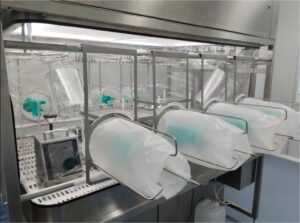
Debris generated during medical-device assembly does not announce itself at the point of impact—it shows up later, as a rejected unit, a failed inspection, or an unexplained particle count. The real decision facing assembly teams is where in the process debris actually originates, and whether the controls in place address that origin or simply manage its aftermath. Getting this sequence backward wastes effort on general room conditions while the specific step that generates debris remains unaddressed.
Locate Debris Sources at Each Assembly Step
Debris control starts with attribution, not with equipment selection. Before choosing any control method, the assembly process itself has to be observed step by step to identify what is actually releasing particles at each point: the component being handled, the tool performing work on it, the fixture holding it in place, the fastener being driven or seated, the packaging being opened or discarded, the operator present at the station, or the cleaning material used between operations.
This matters because each source category behaves differently and responds to a different kind of control. A component that sheds material as it is handled calls for a different response than a tool that generates particles through mechanical action, or a cleaning material that leaves residue after it has done its job. Treating all debris as a single undifferentiated problem leads to controls that address the wrong step, or that address a step generally without matching the specific source active there.
The practical approach is to walk the assembly sequence and ask, at each station, what generated the particles observed or suspected at that point. Where a station involves multiple simultaneous activities—for example, an operator manipulating a component while using a tool near a fixture—more than one source may be active, and the controls selected later will need to address each one rather than the station as a whole.
This source-level attribution also determines what evidence is relevant later. A control that successfully reduces airborne particle counts in a room does not, by itself, confirm that a specific tool or fastening operation has been addressed, because the source producing debris at that station may be entirely distinct from the general room condition. The attribution step is what connects a later control decision back to the actual cause, rather than to a coincidental improvement in an unrelated metric.
Where the assembly process changes—a new component is introduced, a fastening method is substituted, a different packaging format is adopted—the source attribution has to be repeated for that step. A control designed around one source does not automatically remain valid when the source itself changes, even if the surrounding process appears otherwise unchanged.
Distinguish Airborne, Surface, Tool, and Handling Pathways
| Debris pathway | Supported control or check | Evidence boundary |
|---|---|---|
| Airborne | Classify airborne particle concentration at designated sampling locations | Classification does not characterize whether particles are viable, chemical, radiological, or another type |
| Surface | Use cleanable work surfaces and inspect where debris can affect the device | The condition to maintain must be defined for the project |
| Tool | Confirm performance with representative tools and maintenance access | An empty-room result does not establish control during intended tool use or maintenance access |
| Handling | Include representative staffing and protect material transfer | An empty-room result does not establish control during intended handling and transfer |
Once a source is identified, the next judgment is how debris from that source actually reaches a point where it can affect the device. Debris does not follow a single pathway; it can travel through the air, persist on a surface, transfer from a tool during use or maintenance, or move with material as it is handled and passed between steps. Each pathway requires a different supported control or check, and conflating them leads to a false sense that one method covers all of them.
Airborne debris is addressed through classification of particle concentration at designated sampling locations, consistent with ISO 14644-1. This classification establishes particle count by size category at the locations measured; it does not characterize whether those particles are viable, chemical, radiological, or another type. Where the device is sensitive to a particular particle nature rather than particle count alone, airborne classification by itself does not answer the question the project needs answered, and a separate characterization becomes necessary.
Surface debris is managed differently: through cleanable work surfaces and inspection at the point where debris could affect the device. This pathway depends on the project first defining the condition that must be maintained at that surface, because “clean” without a defined condition gives the inspection step nothing concrete to confirm against.
Tool-related debris introduces its own complication, because a tool’s contribution to particle generation changes with use and with maintenance access. A tool evaluated in isolation, before representative use or before the maintenance interventions it will actually receive, does not represent the condition the assembly floor will experience during normal operation.
Handling debris follows the pathway created by staffing and material transfer. Representative staffing patterns and protected transfer arrangements are what confirm this pathway is controlled; an idealized or minimal-handling scenario does not establish what happens when the process runs with its intended operators and transfer steps.
Where a project treats these four pathways as one undifferentiated “contamination” category, the resulting control plan tends to over-rely on whichever pathway is easiest to measure—often airborne classification—while surface, tool, and handling pathways remain unconfirmed.
Capture Contamination Near Cutting, Trimming, and Fastening Work
Cutting, trimming, and fastening operations generate debris through mechanical action at a specific, identifiable point in space and time. The governing principle for this kind of generation is to place capture or local protection as close to that point of generation as the process allows, rather than relying on general room conditions to remove debris after it has already dispersed.
The reasoning behind this principle is straightforward: debris disperses from its point of origin as a function of airflow, mechanical disturbance, and time elapsed since generation. The closer a capture or protection measure sits to the actual generation point, the less opportunity debris has to disperse before it is addressed. A control positioned at a distance from the generation point, or one that relies on the room’s general air handling to eventually clear the debris, allows a window during which that debris can settle on surfaces, transfer to tools, or reach an open product.
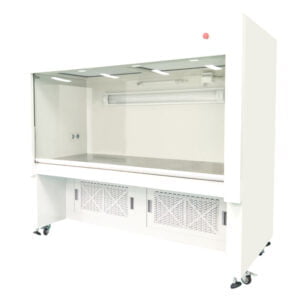
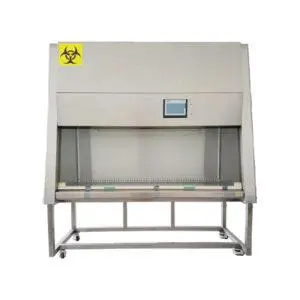
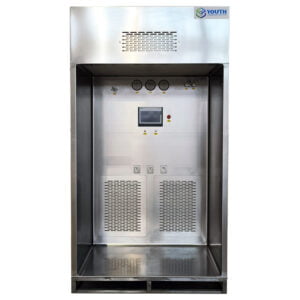
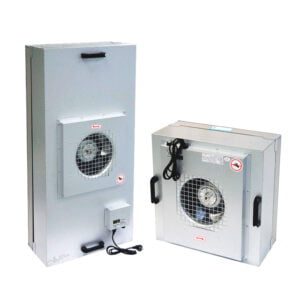
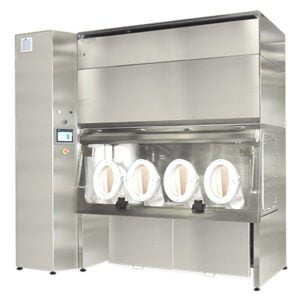
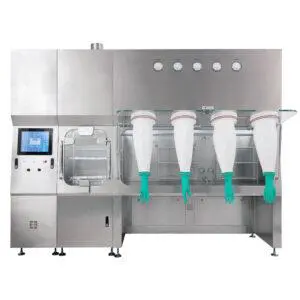
This has a direct configuration consequence. Where cutting, trimming, or fastening work occurs at a fixed station, local capture or protection can be built into that station’s layout. Where the same operations occur at variable locations, or where the tool generating debris moves with the operator, the capture or protection measure needs to be considered as something that travels with the work rather than as a fixed installation—for example, local airflow management incorporated into a workstation, such as what a Cleanroom LAF Operation Bench configuration is designed to provide at a defined work zone, versus a more general-purpose Laminar Air Flow Unit supplying protected air to a broader area.
The condition that changes this judgment is the relationship between the generation point and the sensitive product. Where cutting, trimming, or fastening occurs on a step removed from open product exposure, capture near the source reduces dispersion but may not need to meet the same standard as capture occurring immediately adjacent to an open, sensitive assembly step. The proximity of the generation point to the point of product sensitivity is what determines how tightly the capture or local protection measure must be matched to the source.
Arrange Cleaning, Inspection, and Material Transfer Around the Source
| Control point | Supported arrangement | Decision supported |
|---|---|---|
| At debris generation | Place capture or local protection near the source | Control debris before it follows the pathway |
| At the work surface | Provide a cleanable surface and apply cleaning around the source | Maintain the defined condition at the work area |
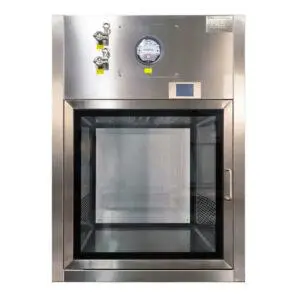
| During material transfer | Keep transfer protected | Preserve control as material moves from the source area |
| Where debris can affect the device | Inspect at that point | Determine whether debris has reached a device-sensitive point |
| Between debris-producing work and sensitive open-product steps | Separate the work when local controls and cleaning cannot maintain the defined condition | Decide when local control is insufficient and physical separation is needed |
Once sources are identified and their pathways understood, the controls themselves need to be arranged in a sequence that follows debris from generation to potential impact, rather than being scattered across the process without regard to that sequence. This arrangement has a logic: capture or local protection belongs at the point of generation, a cleanable surface and cleaning activity belong at the work area itself, protected transfer belongs wherever material moves between steps, and inspection belongs specifically at the point where debris could affect the device—not simply at a convenient point in the process.
This sequencing matters because a control placed out of order with respect to the debris pathway can still appear to function while missing the debris it was intended to catch. Inspection performed before a transfer step, for example, does not confirm the condition of material after that transfer has occurred. Cleaning scheduled on a fixed interval unrelated to the actual generation events at a station may clean a surface that has not yet accumulated debris while leaving a different, debris-generating station unaddressed.
The more consequential judgment in this arrangement concerns when local controls and cleaning are no longer sufficient. Where debris-producing work and sensitive open-product steps occur close together—whether in physical proximity, in time, or both—local capture, cleanable surfaces, and inspection may not be enough to maintain the defined condition under normal output levels and the interventions operators perform during normal work. At that point, the debris-producing work needs to be separated from the open-product step rather than relying on local controls to compensate for that proximity.
This separation decision depends on whether the local controls can hold the defined condition under realistic conditions, not under an idealized or minimal-activity scenario. A project evaluating whether separation is needed should examine the arrangement under its actual expected output and the interventions—adjustments, material changes, tool changes—that operators perform as a normal part of running the process, because a control arrangement that holds under light or idealized conditions does not necessarily hold once those interventions are introduced.
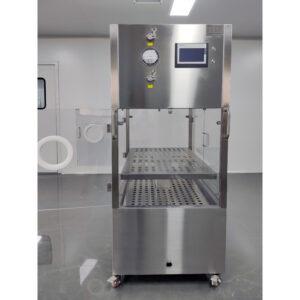
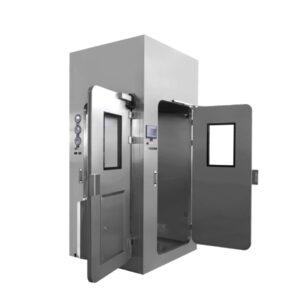
Configuring a workstation to support this arrangement—placing cleanable surfaces, capture points, and transfer paths in a layout that reflects the debris pathway rather than a generic bench layout—is the kind of project-specific detail that a Custom Cleanroom Workstation configuration is built around, once the project has defined which debris sources and pathways that workstation needs to address.
Confirm Control Effectiveness Under Intended Operating Conditions
| Reference | Supported evidence role | What it does not establish |
|---|---|---|
| ISO 14644-1:2015 | Airborne-particle classification at designated sampling locations | Particle nature, including viable, chemical, or radiological characteristics |
| ISO 14644-3:2019 | Cleanroom and clean-zone performance test methods across airflow types and occupancy states | Product or process performance, or a universal acceptance limit |
| ISO 14644-4:2022 | Design, construction, start-up, and verification framework | A process-specific debris-control technology |
The final judgment is whether a control arrangement, once put in place, actually performs under the conditions the assembly process will run under—not under the conditions most convenient to test. This is where the distinction between a cleanroom-level result and a process-specific debris-control result becomes most consequential, because the two are frequently conflated.
Confirming performance means including representative staffing, representative tools, representative loads, representative maintenance access, and the operating states the process will actually experience—rather than relying on a result obtained in an empty or idle state. An empty-room measurement describes a condition the assembly process will not actually be in during production, and a control arrangement validated only in that state leaves open the question of whether it performs once operators, tools, and material flow are introduced.
ISO 14644 standards are relevant to this confirmation but each covers a distinct portion of it. ISO 14644-1 supports airborne-particle classification at designated sampling locations; it does not characterize particle nature. ISO 14644-3 supports test methods for cleanroom and clean-zone performance across different airflow types and occupancy states, which is directly relevant to testing under conditions closer to actual operation rather than an idle state—but it does not test the product or process itself, and it sets no universal acceptance limit that applies across projects. ISO 14644-4 supports the design, construction, start-up, and verification framework for cleanrooms and clean zones, but it does not prescribe a process-specific debris-control technology, meaning it establishes how a room or zone is verified structurally without dictating how a particular assembly-step debris source should be controlled.
The practical consequence is that a project needs to decide, deliberately, which occupancy or operating state its confirmation testing represents, and whether that state matches the conditions under which the assembly process actually runs—normal staffing levels, the tools in active use, the material loads moving through the process, and the maintenance interventions that occur during production. A confirmation performed under a state that does not match intended operation leaves a gap between what was tested and what the process will actually do.
Where a project is preparing this kind of evidence for a supplier conversation, the specific debris sources identified, the pathways they follow, and the operating conditions under which confirmation will occur are the information that allows a supplier’s configuration or quotation review to address the actual control need, rather than a general room-level specification that may not match the debris sources the assembly process generates.
Frequently Asked Questions
Q: When is local debris control enough, and when should an assembly step be separated?
A: Local capture or protection is suitable only when it and the planned cleaning can maintain the project-defined condition during normal output and interventions. If that condition cannot be maintained where sensitive open-product work occurs, separate the debris-producing step from that work.
Q: What information should be mapped before choosing a workstation or local airflow arrangement?
A: Record which component, tool, fixture, fastener, packaging item, operator action, or cleaning material can release debris at each step. Also identify the device-sensitive point, transfer route, staffing, tool load, and maintenance access so the proposed arrangement can be checked against representative use.
Q: Does an airborne-particle classification show that assembly debris is fully controlled?
A: No. ISO 14644-1 classification establishes airborne particle concentration at designated sampling locations, but it does not identify particle nature or prove product or process performance. Pair it with pathway-specific checks and inspection where debris could affect the device.
Q: Can an empty-room test be used as the final evidence for assembly contamination control?
A: An empty-room result alone is insufficient for that decision. Confirm the planned controls with representative staffing, tools, loads, maintenance access, material transfers, and operating states, using project-defined acceptance conditions at the relevant points.