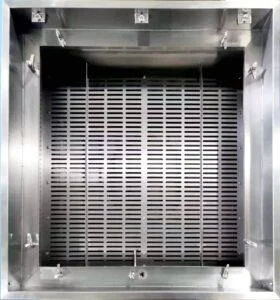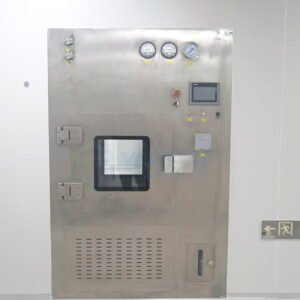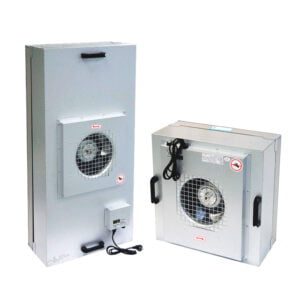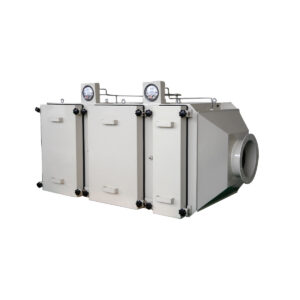
A medium filter placed ahead of a HEPA stage intercepts coarse and intermediate particles so that less dust loads the final filter, but it carries no part of the HEPA stage’s efficiency duty. The two positions stay separate: medium filters for HEPA protection are a general-ventilation filtration measure, while the HEPA filter remains the classified high-efficiency element whose performance and installed integrity are established on its own terms. Whether the arrangement actually helps depends on conditions you can define in advance — the particle burden at the intake, the airflow and resistance the fan can serve, and whether the medium-filter frame seals well enough that air cannot pass around the media.
Give the medium filter and HEPA stage separate duties
| Stage | Duty in the filtration chain | What must remain separate |
|---|---|---|
| Upstream medium filter | Intercept particles before they reach the HEPA stage | Its protective role does not establish the downstream HEPA filter’s performance classification. |
| Downstream HEPA filter | Provide the separately specified high-efficiency final filtration | Filter classification and testing remain distinct from installed integrity, airflow and applicable cleanroom-performance checks. |
Specify the medium filter as upstream particle interception and keep the HEPA stage’s performance requirement written separately, in its own terms. When a project writes “medium filter protects the HEPA” into a specification without also writing what the HEPA filter must achieve and how that will be shown, the two duties blur and the upstream filter starts to look like part of the final-filter case. It is not. Prefiltration changes how much dust arrives at the HEPA media; it does not change what the HEPA filter must remove from the air that passes through it.
The distinction matters because the evidence behind each stage comes from a different place. HEPA and ULPA filter elements are classified, tested and marked under ISO 29463-1:2024, which covers filter-element performance classification, assessment, marking and test-result documentation — that is element-level evidence, used alongside the other parts of ISO 29463 and separate from any evidence about the filter as installed in a system. A medium filter sitting upstream has no bearing on that classification, and an upstream filter’s own rating cannot be read across to the final stage.
Follow the air through the chain and the division of labor is easy to keep straight. Outdoor or recirculated air meets the medium-filter bank, which holds back the load that would otherwise bury the HEPA pleats; what passes through then reaches the HEPA stage, which does the work the clean zone actually depends on. Each stage is specified, purchased and assessed against its own duty, and a change at one position does not transfer credit to the other.
Balance upstream interception with fan pressure
Choose the upstream medium filter by comparing candidates at the actual intake conditions and operating airflow, not by its rating alone. A higher-interception medium filter removes more of what would reach the HEPA stage, but it does so by presenting finer or denser media, and finer media costs pressure. That pressure has to come from somewhere in the air system, and the fan is the one component that cannot be asked for more than it has.
The physics is straightforward. Total system resistance is the sum of the duct, coil, damper and filter losses, and a fan delivers a given airflow only against a given static pressure. Add resistance at the medium-filter bank and the operating point shifts along the fan curve: airflow drops unless the fan can be adjusted or the rest of the system has margin. In a cleanroom supply, less airflow means fewer air changes and a weaker pressure cascade, so a prefilter chosen purely for interception can degrade the room performance it was meant to help protect. The loss also grows as the filter loads, so the relevant comparison is not only clean resistance but the change-out resistance at which the filter will be replaced.
That makes a few facts worth having before the selection discussion: the design airflow through the bank, the fan’s available static pressure and whether it has adjustable speed, the resistance already consumed by the downstream HEPA stage, and what the intake air actually carries — outdoor dust, construction debris, process-generated fibers or recirculated room air all load a filter differently. The system designer or the air handler datasheet holds the fan’s pressure reserve; without that figure, no one can say how restrictive an upstream medium filter the installation will tolerate. Where the reserve is genuinely thin, the realistic options are a less restrictive medium filter with a larger media area, a bigger bank face area to lower the velocity, or a fan change — and those are design decisions, not filter-catalog decisions.
Close bypass paths around the medium-filter bank
A nominal filter rating only describes the media, so the protective effect depends on whether the bank forces air through that media. Air takes the path of least resistance. A gap between the filter frame and the holding frame, a loose clamp, a missing gasket or an unblanked opening in the rack offers far less resistance than pleated media, and the fraction of air that leaks through those gaps arrives at the HEPA stage carrying its full original dust load. The upstream filter can be perfectly good and still contribute nothing, because the air never met it.
So resolve the mechanical fit before relying on the filter’s rating. That means confirming the filter’s frame dimensions and depth against the holding frame rather than ordering to a nominal size, confirming the gasket type and face on which it seals, confirming the retention hardware — clips, clamps, spring latches — can apply even pressure around the perimeter without racking a light frame, and confirming that every unused slot in a multi-slot bank is blanked rather than left open. On rebuilds, check the condition of the holding frame itself; a distorted or corroded frame will not seal a flat gasket no matter what filter goes into it.
This is where a sound component specification and a deliberate installation have to arrive together. The filter supplier can state the frame dimensions, gasket arrangement and recommended holding frame, but the condition of the installed rack and the blanking of spare positions are site facts that the contractor or facility engineer confirms. Where the bank is being added to an existing air handler, it is worth settling the clearance for filter removal at the same time, since a bank that cannot be reached cleanly tends to be reassembled badly.
Investigate downstream loading without assuming a fixed life gain
When HEPA pressure drop rises despite an upstream medium-filter stage, work through the chain before concluding the HEPA filter is at fault. The same symptom — rising resistance at the final stage — can come from the air system, from the upstream filter, from the bank’s installation, or from the HEPA filter itself, and replacing the HEPA element first is the expensive way to find that out.
Compare four things. First, airflow: if flow through the unit has risen, resistance rises with it, and the filter may be doing nothing unusual. Second, the medium filter’s own condition and its current pressure drop against its clean value; a loaded or collapsed prefilter changes both the resistance it contributes and the load it passes. Third, bypass around the medium-filter bank, since leaked air carries unfiltered dust straight to the HEPA pleats and will load them at a rate the prefilter rating never predicted. Fourth, the earlier readings themselves — a trend from commissioning onward distinguishes a steady loading curve from a step change caused by an event such as construction nearby or a filter change done incorrectly. Any decision to remove or replace an installed HEPA filter in a classified area, and any decision to return the system to service afterward, belongs to the project’s approved procedure and its designated approver.
The same discipline applies to service-life claims made at the quotation stage. A protection benefit is real, but its size depends entirely on what reaches the system and how the system is run, so a supplier offering a fixed percentage or a set number of extra months is describing one set of conditions and presenting it as a general result. Ask what dust concentration and composition the comparison assumed, at what airflow, with which upstream filter and at what change-out pressure the filters were replaced. If those conditions resemble the site, the figure is useful context; if they do not, or if they cannot be stated, keep the project’s own expectation conditional and plan the replacement interval around measured pressure drop and the differential-pressure monitoring the installation provides rather than around a promised date. Because the HEPA stage’s own pressure loss drives fan energy as it climbs, this trend is worth tracking as a running cost as well as a maintenance trigger.
Retain the HEPA installation and cleanroom checks
Adding or changing an upstream medium filter does not reduce the qualification evidence required for the HEPA installation and the clean area it serves. Where the HEPA stage protects a sterile-manufacturing clean area, EU GMP Annex 1 addresses installed clean-air performance through several checks — installed filter integrity, airflow, pressure differentials, airflow visualization and recovery among them — and the applicable tests, acceptance criteria and frequencies depend on the function, grade and risk of the clean area concerned and on the test standard the project applies. Element-level classification under ISO 29463-1:2024 tells you what the filter is; it does not tell you how that filter performs once sealed into a housing on site.
Treat an upstream filter change as a change to the air system and assess it in the project’s change-control process. The practical reason is mechanical, not formal: a different medium filter alters the resistance the fan sees, which can shift airflow through the terminal HEPA filters, which in turn can move face velocities, room air change rates, recovery time and the pressure cascade between adjacent rooms. Those are exactly the parameters the installed checks measure, which is why the relevant ones usually need to be repeated after a change of any significance. Which of them apply, and whether the result is acceptable, is determined by the project’s approved qualification protocol and its designated approver.
For a useful discussion with a filter supplier, have the following ready: the intake air condition and what it carries, the design airflow and available fan static pressure, the existing holding-frame dimensions, gasket arrangement and the number of slots with their blanking status, the current clean and change-out pressure drops at both stages, the grade and function of the area the HEPA stage serves, and the access available for filter removal. With those in hand, the conversation can move from nominal ratings to a medium filter that actually intercepts particles at your operating point without taking pressure the HEPA stage needs.
Frequently Asked Questions
Q: What information should we include when requesting an upstream medium filter?
A: Provide the actual intake conditions, operating airflow, resistance the fan can accommodate and filter-rack fit requirements. Compare proposals against those same conditions, including frame sealing, retention and blanking. A nominal rating alone does not show whether the filter will provide useful protection in your installation.
Q: Does rising HEPA pressure drop mean the final filter is faulty even if a medium filter is installed?
A: No. That symptom alone does not establish a HEPA fault. Compare the current airflow and stage readings with earlier readings, then check the medium filter’s condition and possible bypass paths before deciding which component needs corrective work or replacement.
Q: Can we use a promised HEPA life extension as a fixed saving in our proposal comparison?
A: Treat it as conditional until the comparison conditions are clear. Identify the dust exposure, airflow and replacement conditions behind the claim, then check whether they match your project. A fixed percentage or calendar extension without those conditions is not a sound basis for comparing the protective benefit.
Q: Can adding a medium filter replace any checks on a HEPA installation serving a sterile-manufacturing area?
A: The upstream addition does not replace evidence of the HEPA installation’s performance. Keep installed integrity, airflow and applicable room-performance checks within the qualification scope after relevant changes. Determine the applicable checks and acceptance criteria from the area’s function, grade, risk and relevant test standard.