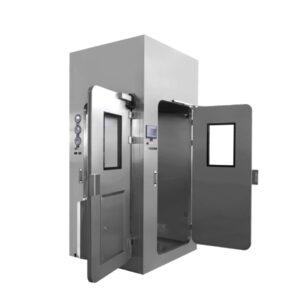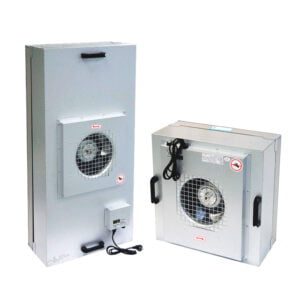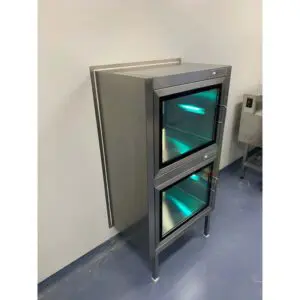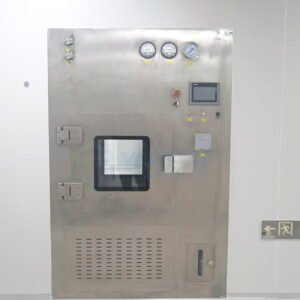
When a mixed proposal arrives with FFUs, LAF units, terminal HEPA housings, and their controls bundled under one line-item list, the immediate question is not which vendor costs less but whether the two proposals are even describing the same equipment doing the same job. A purchaser who compares unit counts or price totals before checking that the underlying air-delivery roles match is comparing numbers that do not yet mean the same thing.
Normalize the Air-Delivery Role in Each Proposal
Before any figure in a proposal becomes useful, it has to be tied to a specific air-delivery role. Fan filter units provide ceiling-mounted filtered-air delivery across a room or zone; laminar air flow units provide localized protection in arrangements that can be configured to the process they serve; HEPA housing boxes function as terminal filter housings installed at a ceiling or wall position, receiving air that has already been generated and moved by something upstream. These are not three versions of the same thing. They occupy different positions in the air path, and a proposal that substitutes one for another without explanation has changed the project’s air-delivery concept, not just its equipment list.
This matters because two proposals can appear to solve the “same” contamination-control need while actually addressing different scopes of that need. One route might use FFUs to establish room-wide filtered air, letting the room itself carry the protection burden. Another might rely on a smaller room-air contribution paired with LAF units placed at defined work zones, shifting the protection responsibility to the local equipment instead of the room. Both can be legitimate answers to a stated need, but they are not interchangeable line items, and a lower FFU count in one proposal does not mean less equipment or lower capability if the difference is made up by localized units doing work the other proposal assigns to the ceiling grid.
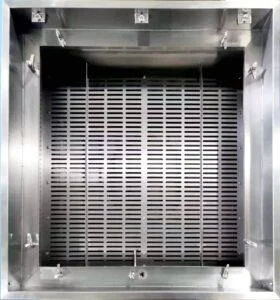
Where a proposal includes HEPA housing boxes, the reader has to identify what air source feeds them. A terminal housing is only as good as the air arriving at its face, so a proposal that lists housings without describing the upstream air-handling concept has left out information needed to judge whether the terminal stage is adequately supported. The same housing count can represent very different systems depending on whether the upstream air is dedicated, shared, or still undefined.
The practical task at this stage is to map every item in each proposal to the same functional project need and the same upstream air concept, so that quantity or configuration differences become visible as real differences rather than artifacts of how each supplier chose to describe their scope. Until that mapping is complete, no cost or count comparison is meaningful, because the reader does not yet know whether the compared items are functionally equivalent.
| Project need | Proposal A route | Proposal B route | Clarification needed |
|---|---|---|---|
| Room-wide filtered-air delivery | Supplier entry | Supplier entry | Equipment role, upstream air concept, and covered zone |
| Localized clean-air protection | Supplier entry | Supplier entry | Protected process area and LAF arrangement |
| Terminal filtration | Supplier entry | Supplier entry | Upstream air source, housing, filter, sealing, and access boundary |
| Mixed-system integration | Supplier entry | Supplier entry | How the offered routes connect without duplicated or missing scope |
Compare the Duty and Configuration Basis, Not Headline Features
Once the functional roles are aligned, the next comparison has to move past headline specifications and into the configuration basis behind them. Manufacturer documentation illustrates how much variation a single equipment family can carry. Camfil’s CamFFU HP-EC High Performance family, for example, varies by size, airflow, maximum external pressure, filter selection, voltage, and control method within one product line. Two units from the same family, let alone from two different suppliers, can carry very different operating bases while sharing a similar name or headline description. A proposal that states an airflow figure without the accompanying external-pressure boundary, filter condition, and control mode has given the reader a number without the context needed to interpret it.
Control architecture is part of this basis. Price’s documentation shows local control and BACnet-based control with associated access options as available approaches for its own equipment, illustrating that control mode is a configuration choice rather than a fixed attribute of the equipment category. Where a project requires centralized monitoring or building-integration compatibility, the control method a proposal assumes changes what else the project must supply and how the unit fits into an existing management system. Where the project instead expects standalone local control, the same equipment configured differently would not meet that expectation even if its airflow and filter specifications matched.
The reader’s task is to align each proposal against the same set of dimensions: airflow duty and the zone it serves, the external resistance boundary the stated airflow assumes, the filter type and its declared condition, the unit arrangement, the power basis, the control mode, the monitoring points included, and which side of the unit is used for access or service. When a proposal omits one of these, that omission should be treated as an open item requiring clarification, not filled in with an assumed industry-standard value, because no such universal value exists across suppliers or families. A proposal that states an airflow number under an unstated external-pressure assumption cannot be placed side-by-side with one that states its external-pressure boundary explicitly; the two figures are not directly comparable until the basis is disclosed.
This is also where numeric targets that did not come from the project itself have to be set aside. A specification sheet from one manufacturer’s family is evidence of what that family can be configured to do, not a target the project is obligated to meet or a baseline every competing proposal should be measured against.
| Comparison dimension | Proposal A | Proposal B | Common basis required |
|---|---|---|---|
| Airflow duty and zone | Supplier entry | Supplier entry | Same project operating requirement |
| External resistance boundary | Supplier entry | Supplier entry | Same included and excluded air-path elements |
| Filter and reference condition | Supplier entry | Supplier entry | Same filter role and declared condition |
| Power and control | Supplier entry | Supplier entry | Same project supply and desired control architecture |
| Monitoring and access | Supplier entry | Supplier entry | Same required points and service-side constraints |
| Supporting evidence | Supplier entry | Supplier entry | Traceable to the offered configuration |
Separate Supplied Equipment From Site and Integration Work
A proposal’s equipment list describes what the supplier intends to provide, not everything the project needs to make that equipment functional. The Terra Universal WhisperFlow installation and operation manual illustrates how much sits at the boundary between supplied equipment and site conditions: fitting the unit into a ceiling grid, providing adequate structural support, keeping clear space around the unit, making the power connection, and performing in-place checks once installed. These are not automatically the supplier’s responsibility, and they are not automatically the project’s responsibility either — the manual describes what the interface requires, not who performs each part of it.
ISO 14644-4:2022 reinforces this same separation at a broader level. The standard identifies distinct parties in a cleanroom project — users, specifiers, designers, purchasers, suppliers, builders, and performance verifiers — without prescribing how responsibilities are allocated contractually between them. This means the standard confirms that these interfaces exist and need coordination, but it does not tell a purchaser which party on a given project should own a given task. That allocation is a project-specific decision each proposal should state explicitly rather than leave implied.
Where a proposal is silent on an interface, the reader should not assume the supplier will cover it. A proposal that lists the equipment, filters, and accessories included may still leave connection pieces, structural frames or supports, power distribution wiring, control panels or network gateways, programming, access provisions, sealing, finishes, installation labor, start-up support, or documentation as unaddressed. Each of these can sit with the supplier, with the site contractor, or be split between them, depending on how the project is structured. A proposal that bundles installation and start-up support changes the coordination burden on the project team compared with one that supplies equipment only and expects site parties to handle fit-up and connection.
This is the stage at which the reader benefits from treating each interface as either supplier-confirmed or project-assigned, rather than assuming a universal division of labor applies. When project information such as ceiling grid dimensions, available structural support, or existing power infrastructure is supplied to a manufacturer for configuration or quotation review, that information becomes part of what determines which interfaces the supplier’s proposal can actually cover — a proposal built without that information is provisional on it being confirmed later.
| Scope item | Supplier offer states | Site or project input states | Status |
|---|---|---|---|
| Equipment, filters, and accessories | Included items and configuration | Required role and project conditions | Confirmed or open |
| Duct, transition, frame, and support interfaces | Supplied connection data and included pieces | Existing or designed site conditions | Confirmed or open |
| Power, controls, network, and programming | Supplied components, protocols, and services | Available infrastructure and integration requirements | Confirmed or open |
| Access, sealing, finishes, and installation | Supplied requirements and included work | Site provisions and assigned work | Confirmed or open |
| Start-up and verification information | Supplier records and support offered | Project plan, participants, and acceptance basis | Confirmed or open |
Make the Selection on Gaps, Risks, and Confirmation Evidence
By this point, the reader has normalized the equipment roles, aligned the configuration basis, and separated supplied scope from site-assigned work across each proposal. What remains is converting whatever did not reconcile into a bounded list of items to resolve, rather than treating unresolved differences as reasons to prefer one proposal on incomplete grounds.
A clarification register serves this purpose: it holds the missing data points, the places where two proposals used different boundaries for what looks like the same figure, the exclusions each supplier stated, the assumptions embedded in a stated specification, and any configuration claim that lacked current supporting evidence tied to the specific offered item. Where one proposal’s airflow figure assumed an external-pressure boundary the other proposal did not state, that gap belongs in the register rather than being resolved by assuming the two figures mean the same thing. Where a control architecture was proposed without stating whether it matches the project’s existing building systems, that also stays open until confirmed.
The condition that determines whether a proposal is ready for commercial comparison is whether its technical basis and scope can be reconciled against the same project requirements — not whether it has the lowest count, the newest-looking equipment list, or the fewest visible exclusions. A proposal with clearly stated exclusions and a defined configuration basis can be easier to evaluate than one with no stated exclusions at all, because the silent proposal has not disclosed where its boundaries sit; where a proposal states its assumptions plainly, the reader can weigh what still needs confirmation, while where a proposal states nothing about its basis, the reader cannot yet tell what has been assumed on their behalf.
Coordinating this comparison connects directly to how the offered equipment fits the project afterward: a fan filter unit or terminal HEPA housing under review at this stage is also the equipment whose delivery, integration, and maintenance interfaces the project team will manage once a route is selected, so unresolved scope questions carried past selection tend to resurface at installation or start-up instead of being closed earlier when they are easier to address.
This process does not itself select a supplier, verify installed performance, or determine compliance or acceptance. It produces a defined set of confirmed items and a defined set of open items, which is the basis on which a commercial decision and, separately, a technical acceptance process can proceed.
| Gap or assumption | Proposal affected | Decision impact | Evidence or confirmation needed |
|---|---|---|---|
| Different equipment-role boundary | Supplier entry | Technical scope is not directly comparable | Reconciled functional map |
| Different airflow or resistance basis | Supplier entry | Performance figures cannot be normalized | Common project duty and supplier response |
| Missing interface or responsibility | Supplier entry | Cost, schedule, or coordination exposure remains open | Explicit inclusion, exclusion, and assigned party |
| Unverified configuration claim | Supplier entry | Suitability remains unproven | Current supplier evidence tied to the offered item |
| Project condition still unknown | Both or either | Final selection may depend on site data | Survey, design input, or project confirmation |
Frequently Asked Questions
Q: One bidder offers fewer FFUs and more LAF equipment. Can I compare the total equipment prices?
A: First reconcile which room and process responsibilities each proposal covers. Different equipment counts may reflect different functional boundaries rather than a cheaper equivalent solution. Ask each bidder to map its items to the same zones, local protection needs, and upstream air concept.
Q: Can a lower quoted price simply mean that installation work is excluded?
A: Yes, differing scope can make prices misleading. Compare connections, supports, access provisions, sealing or finishes, wiring, programming, installation, and start-up support alongside the equipment. Require explicit inclusions, exclusions, and project-assigned responsibilities before commercial comparison.
Q: What should I do if one supplier does not state its filter condition or external resistance basis?
A: Request that missing basis before treating its duty figures as equivalent. Align airflow, zone, included air-path resistance, filter reference condition, power, controls, and access requirements. An omitted assumption should remain a clarification item rather than becoming an assumed match.
Q: When is the comparison ready to support a supplier-selection decision?
A: It is ready for commercial comparison when the technical basis and scope can be reconciled to the same project requirements. Keep material gaps and unavailable configuration evidence visible and obtain the necessary confirmations. The comparison organizes the decision; it does not itself verify installed performance or acceptance.