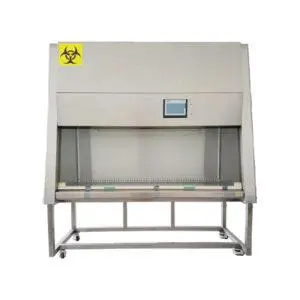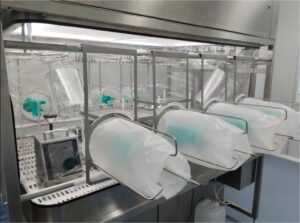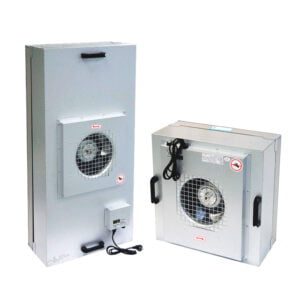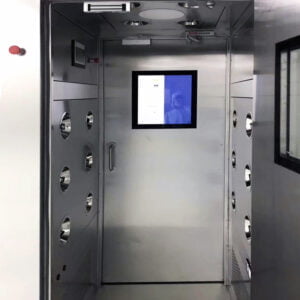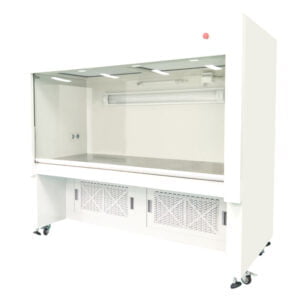
An FFU and a LAF unit can be installed in the same cleanroom, but that possibility does not answer the design question. One equipment family may be used for room-level filtered-air delivery, while the other may be used for local protection of an exposed process. The project becomes difficult when those roles are blurred: room supply may be treated as local process protection, or a local airflow field may be selected without defining its working zone or verification basis. Map the room background, the exposed process, and the boundary between them before comparing configurations.
Start with Two Different Protection Responsibilities
Coexistence is a responsibility question, not an automatic yes or no. A room may need general filtered-air delivery while an exposed process needs a more localized protected airflow field. The project needs to define the process risk, target zone, background conditions, and applicable verification basis before equipment selection is treated as settled.
| Decision object | Question to answer | Evidence or input needed |
|---|---|---|
| Room background | What filtered-air responsibility applies to the room as a whole? | Room layout, occupancy, process context, and project design basis |
| Local exposed process | Which operation or product-contact area needs a defined protected airflow field? | Process map, exposure points, interventions, and applicable project requirements |
| Boundary between them | Where must room supply stop being treated as local process protection? | Zone sketch and responsibility statement |
| Combined performance | How will the installed arrangement be checked? | Agreed visualization, measurement, and project verification plan |
Use this map to separate decision objects before discussing whether the two equipment types can be combined.
What the FFU Is Expected to Do for the Room
Camfil’s product-family page describes an FFU as a stand-alone assembly with an integrated HEPA filter, fan, and controls that supplies filtered recirculated air to a cleanroom (Camfil Fan Filter Units for Clean Room Applications). That description is useful for distinguishing the equipment family, but it is not a YOUTH specification and does not establish room class, air-change result, pressure outcome, or compatibility with a particular local protection arrangement. In this topic, the FFU’s expected responsibility is room-level filtered-air delivery. YOUTH’s Fan Filter Unit – FFU route is the place to discuss project-specific FFU configuration and interfaces. For broader equipment-family and selection context, the Cleanroom Equipment Types | Classification | Selection Guide can be used as a navigation aid, not as a substitute for project design confirmation.
What the LAF Unit Is Expected to Protect Locally
For the local side, YOUTH’s Laminar Air Flow Unit – LAF Unit page presents the LAF unit in a site-specific role: localized unidirectional clean-air protection, with vertical, horizontal, suspended, or floor-supported project options. That local role should be tied to the exposed process, not assumed from the equipment name. In the EU sterile medicinal-product context, EU GMP Annex 1 distinguishes a critical zone, uninterrupted first air, and the need to avoid obstruction of unidirectional airflow. This illustrates why, in that sterile-product context, local airflow needs to be defined around the exposed process and kept unobstructed; it does not impose a universal LAF solution, prove YOUTH compliance, or establish values for another industry or project. The project still needs to define the working area, discharge direction, process exposure, interventions, and applicable verification requirements. For the adjacent LAF specification and RFQ decision, see Laminar Flow Hood Specifications for RFQ and Vendor Comparison.
Check How the Two Airflow Fields Interact
Once both roles are stated, check the combined airflow interface. The relevant questions are where the LAF field begins and ends; where FFU supply and room return paths sit; whether people, equipment, heat sources, doors, or adjacent supply disrupt the intended path; and how airflow visualization or other agreed evidence will confirm the combined arrangement. These are project questions, not universal acceptance criteria.
| Interface | Project question | Required follow-up |
|---|---|---|
| FFU supply location | How does room supply approach the local zone? | Review on the coordinated layout |
| LAF discharge path | What working area and direction must remain protected? | Define the local-zone boundary |
| Returns and openings | Where does air leave, and can doors or openings disturb the intended path? | Confirm with the room designer |
| People and equipment | Which routine positions or interventions enter the airflow path? | Include them in the project assessment |
| Verification | What evidence will demonstrate the combined arrangement? | Agree the method and responsibility before quotation |
Freeze Responsibilities, Interfaces, and Verification Before RFQ
Before RFQ, freeze the responsibility split so quotations do not assume missing design inputs. Process layout, room background design, ceiling and utility data, LAF working-zone definition, controls, access, and verification requirements need an identified owner. YOUTH may configure relevant FFU and LAF equipment to the project, but the final arrangement, performance, and evidence package remain subject to that project’s confirmation.
| Scope item | Buyer or designer provides | Supplier confirms |
|---|---|---|
| Process and zone map | Exposure points and required protection boundary | Proposed equipment role and assumptions |
| Room-air basis | Background design and known constraints | FFU configuration and interfaces offered |
| Local-protection basis | Work zone, orientation, access, and process conditions | LAF arrangement and project dependencies |
| Controls and utilities | Available services and integration expectations | Connections, controls, and exclusions |
| Project evidence | Required review, test, and document outcomes | Evidence included and items requiring others |
Use the handoff table to make assumptions and exclusions visible before comparing suppliers.
Frequently Asked Questions
Q: If my cleanroom already has FFUs, why might an exposed process still need a LAF unit?
A: FFUs address room-level filtered-air delivery, while a LAF unit addresses a defined local airflow field around an exposed process. Decide whether that local responsibility exists by mapping exposure points, interventions, and the required protection boundary; the presence of room FFUs alone does not settle it.
Q: Can I specify FFUs and a LAF unit as separate purchases?
A: You can separate the equipment scopes, but their airflow and installation interfaces still need a coordinated project review. Supply locations, returns, openings, people, and adjacent equipment can affect the intended local path. Give both suppliers the same zone layout and identify who confirms the combined arrangement.
Q: Does adding a LAF unit establish a cleanroom class or pharmaceutical compliance?
A: No. Equipment selection alone does not establish either outcome. Define the applicable requirements and evidence for your project; sterile-manufacturing concepts such as first air have a specific sector context and should not become universal requirements for unrelated processes.
Q: What information will help a supplier assess whether the two units can work together?
A: Provide the process and exposure map, room-air design basis, local working-zone boundary, ceiling and utility details, access needs, and control expectations. Also agree which party supplies the layout review and verification evidence, such as airflow visualization where applicable, so the quotation states both equipment roles and unresolved interfaces.