Moving a legacy medium-filter specification from EN 779 to ISO 16890 is a specification-control exercise, not a label swap: you recover the actual duty of the installed filter, obtain model-specific ISO 16890 reporting for whatever is offered, and then compare fit, airflow and pressure as separate questions from classification. ISO 16890-1:2016 classifies general-ventilation air filters by particulate-matter efficiency, which is a different reporting basis from the one a legacy class designation came from, so the new document has to describe the duty rather than translate a designation. The conditions that decide how much work this takes are concrete: whether the installed filter model and its original performance records can still be identified, whether the filter rack and frame dimensions are retained, and whether the position sits in a GMP-qualified air system.
Recover the legacy filter duty and supporting records
The first task is to establish what the installed filter actually does, because an EN 779 class on a schedule line states a classification and leaves the operating duty unstated. Before drafting any replacement text, recover the installed filter model, its frame and media dimensions, the design airflow at that position, and the original performance documents supplied with it. Those four items describe the duty; the class designation alone does not.
A legacy schedule that names only a class is a common starting point in buildings whose HVAC drawings have outlived their equipment records. What is missing in that case is the model identity, and it is held in places outside the schedule: the air handling unit’s as-built documentation, the filter rack itself where frame labels often survive, the maintenance or changeout log, and the purchasing records for the last replacement batch. Until one of those yields the model, the project has a classification and no duty, and a replacement specification written from the designation alone will describe a filter that nobody has confirmed fits or performs the same job.
The duty also includes the position’s purpose in the air path. A medium-efficiency filter installed upstream of a terminal HEPA stage exists to remove the particle loading that would otherwise shorten HEPA life and raise system pressure; the same nominal class installed as a final filter in a general ventilation branch serves a different end. Matching the medium filter’s grade to the HEPA protection requirement and the system’s energy budget is the reason the position was specified at the level it was, so record what the medium-filter stage protects and at what airflow it was designed to do so. That record is what the replacement specification has to satisfy.
Where the original performance documents cannot be found, say so in the recovery record and name what is missing rather than reconstructing it. An initial pressure drop assumed from memory becomes an acceptance criterion by accident once it appears in a specification.
Obtain model-specific ISO 16890 reporting
When a supplier proposes an ISO 16890 designation for a legacy medium-filter position, ask for the test report belonging to the model being offered, and record the exact designation together with the test basis as reported. That report, tied to a specific product, is the evidence the replacement specification will cite.
The distinction that matters here is between a model-specific record and an informal cross-reference. A cross-reference is a supplier’s statement that one designation corresponds to another; it may reflect long experience with the product range, but it is not traceable to the offered filter, and the buyer cannot attach it to a specification that someone else will have to verify at delivery. ISO 16890-1:2016 defines the classification system based upon particulate-matter efficiency and the technical requirements that go with it; what a given product reports under that system is a property of that product’s own testing, which is why the report identifier belongs in the procurement file alongside the quotation.
Record the designation exactly as the report states it, including the reported test basis. Paraphrasing a designation into a shorter form, or recording it without the basis on which it was determined, removes the information that lets a later reviewer check that the delivered filter matches the accepted offer. Where more than one filter from a range carries similar reporting, the model number and report identifier are what separate them.
This is also the point to resist the temptation to write a conversion rule into the project documents. The specification’s job is to state the duty and the evidence required of the offered product, not to assert an equivalence between two reporting systems on the project’s behalf.
Compare physical fit and pressure separately from classification
| Comparison area | Basis to record for each offered model | Issue requiring review |
|---|---|---|
| Reported classification | Exact designation, reported test basis and model-specific report identifier | The designation relies only on an informal cross-reference. |
| Physical fit | Dimensions and fit to the retained filter rack | The frame cannot seal to the retained rack. |
| Airflow | Offered airflow alongside the retained airflow duty | The offered airflow differs from the documented duty. |
| Pressure | Initial pressure drop and its stated airflow basis | The pressure requirement is unsuitable for the retained duty, or the comparison basis is unclear. |
| Changeout criteria | The project’s stated changeout criteria | The criteria remain unstated in the comparison. |
Classification, physical fit and operating duty are three independent questions, and an offer that satisfies one can fail another without anything in the paperwork looking wrong. Keep them in separate columns of the comparison so that a familiar-looking classification cannot carry an unsuitable pressure requirement or an unfitting frame through the review.
Physical fit decides whether the filter can seal at all. The frame depth, face dimensions and gasket arrangement must suit the retained filter rack and its clamping method; a filter that sits in the rack but does not seal against it lets unfiltered air bypass the media, and a bypass path at a medium-filter position loads the downstream HEPA stage with exactly the particles the medium filter was installed to catch. If the rack is being retained, treat its dimensions as a fixed constraint on the offers rather than a detail to resolve after award.
Pressure and airflow decide whether the fan system can live with the replacement. Initial pressure drop is only meaningful alongside the airflow at which it was determined, so capture both for each offer and compare them against the retained design airflow for the position. A filter with a higher initial resistance at the duty airflow starts the service interval closer to the system’s available fan pressure, which shortens the useful period before the changeout criterion is reached and, in a constant-volume system, shifts the balance point for everything downstream. The project’s changeout criteria belong in the same comparison, because a filter’s practical life depends on the differential pressure at which the site actually replaces it, not on the media alone.
Reported classification stays a column of its own. Recording the designation, the test basis and the report identifier for each offer keeps the classification question answerable later, and keeps it visibly separate from the mechanical and hydraulic checks that decide whether the filter belongs in the rack.
Consider an illustrative case, with the assumption that the rack, duct and fan are all retained: two offered filters report the same ISO 16890 designation from their own test reports, but one has a deeper frame than the rack accepts and the other reports its initial pressure drop at an airflow below the position’s design flow. Neither is disqualified by its classification, and neither can be accepted on classification alone.
Write the replacement specification and response fields
The replacement specification states the retained duty and asks each bidder to answer in fields that can be compared line by line. Write it so that the evidence behind an offer is visible on the same page as the offer itself.
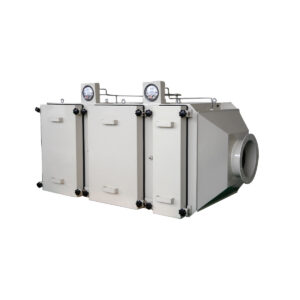
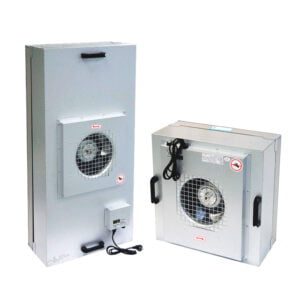
The duty section carries forward what the recovery work established: the position and its purpose in the air path, the design airflow, the frame and face dimensions imposed by the retained rack, the pressure basis the system can accommodate, and the project’s changeout criteria. The response section asks for the exact offered model, the reported ISO 16890 designation with its test basis, the supporting report identifier, the offered airflow, the initial pressure drop with the airflow at which it was determined, and the frame dimensions. Model-specific medium-efficiency filter configurations from suppliers such as YOUTH can then be entered into those fields as a complete, checkable offer rather than as a classification and a price.
What this structure buys is the ability to leave a question open in writing. A line reading existing duty retained; offered model and report attached; airflow and pressure checked separately tells a reviewer that the classification evidence has arrived and the hydraulic check has not been closed out. Unlike offers then stay visibly unlike instead of being flattened into a single comparable number, and the person approving the purchase can see which evidence is still outstanding.
State in the specification that the reference standard has changed and that the position’s role has not, where that is the project’s intention. Updating the reference standard is specification control, and the document should let a later reader distinguish a reporting update from a deliberate change in the filtration arrangement. If the project does intend to change the medium-filter position’s role — raising its grade to extend terminal HEPA life, for example, or relocating the stage — write that as a separate, identified change with its own justification, not as a side effect of adopting a new classification system.
Assess the effect on the qualified air system
Where the legacy schedule belongs to a GMP-qualified system, the revised specification goes through the site’s change assessment before it goes out for quotation, and the assessment defines the verification scope that follows. EudraLex Volume 4 Annex 15 covers qualification and validation for GMP equipment and facilities, including user requirements and design verification and the risk-based control of quality-relevant changes with supporting data and appropriate verification; the qualification stages and criteria that apply are set by the particular project.
The assessment question is whether the replacement alters the qualified operating conditions. A filter that matches the retained airflow, seals in the retained rack and imposes a comparable pressure on the system presents a different impact profile from one that shifts the air handling unit’s operating point, changes the particle loading reaching the terminal HEPA stage, or alters the differential pressure available to maintain room pressure cascades. Those are the mechanisms the impact review examines; what verification they call for, and whether the change is acceptable, is decided by the site’s approved change procedure and its designated approver, not by the specification document or the supplier.
Keep the installed-filter integrity and room classification consequences inside that assessment rather than treating them as a separate afterward. If the medium-filter change affects the pressure available at the terminal stage or the loading it receives, the scope of any subsequent testing of installed HEPA filters and of room classification follows from the project’s qualification approach.
For the supplier discussion that follows, have ready the recovered model and original performance documents, the design airflow and frame dimensions for the position, the pressure basis the retained fan system can support, the project’s changeout criteria, and the outcome of the change assessment with the verification scope it defined. A supplier can quote a filter from the first four; only the last tells everyone what the delivered filter will have to demonstrate before the system returns to its qualified state.
Frequently Asked Questions
Q: Can a supplier’s EN 779–ISO 16890 cross-reference serve as my replacement specification?
A: No. Obtain the offered model’s test report and use its exact reported designation and test basis. Keep the retained airflow duty and physical requirements explicit; an informal cross-reference does not establish that the offered filter is interchangeable with the installed one.
Q: How should I request quotations if I cannot identify the installed filter model?
A: Make the unidentified model an explicit unresolved item. Recover the dimensions, airflow and original performance records, and distinguish confirmed requirements from information still being recovered. Keep any proposed replacement provisional until its evidence can be checked against the retained duty; the old class label alone is not a complete purchasing specification.
Q: A replacement has a lower quoted pressure drop. Is that enough to prefer it?
A: No. First check the airflow basis behind the quoted pressure drop and compare it with the retained duty. The offered frame must also fit and seal to the retained rack, and its classification needs model-specific evidence. A favorable pressure figure cannot resolve a fit problem or an unsupported classification.
Q: Does updating the standard reference determine the verification needed for a GMP-qualified air system?
A: No fixed verification scope follows from the reference update alone. Route the revised specification through the site’s risk-based change assessment, using the proposed model’s supporting data. Make clear whether the medium-filter position retains its documented role ahead of the HEPA stage or whether that role is also being changed, then define the appropriate verification scope.